In this guide
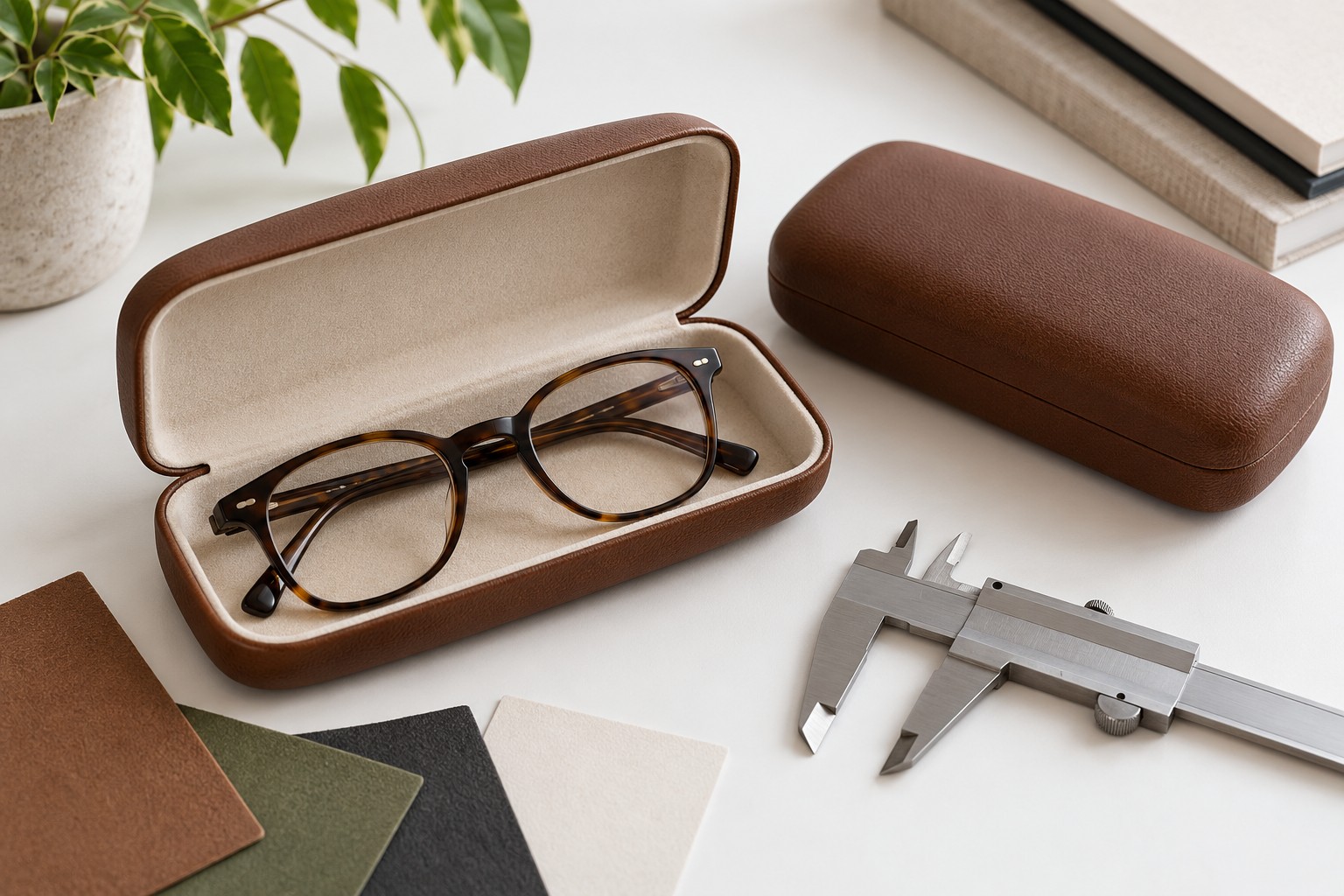
A protective eyewear case starts with the frame it must carry. An attractive shell and a soft lining cannot compensate for a closing lid that presses on the temples, a hard seam beside a lens, or too much movement inside the case. For a custom project, the useful question is: what must this specific case protect, during which activities, and how will the approved sample demonstrate that?
This guide provides a practical specification and sample-review framework for brand buyers. The checks below are proposed engineering checks, not claims that a particular TOPYOU model has passed a laboratory test.
1. Specify the folded frame envelope, not just the case dimensions
Record the maximum length, width and height of the actual folded eyewear in its intended storage orientation. Include protruding nose pads, thick temple tips and decorative details. Use representative frames from the range: a shallow optical frame and a deep, high-wrap sunglass frame can create different interference points even when their front widths are similar.
Separate external case dimensions from usable internal space. Lining thickness, curved walls, hinge housings and lid geometry reduce the available volume. A supplier’s outside dimensions alone cannot establish compatibility. Ask for an internal drawing or section where fit is critical, then verify with physical frames.
Set clearance through sample trials rather than copying a universal allowance. Excess clearance permits movement; insufficient clearance creates contact loads. Define how the frame should sit, how the temples should fold and whether a clean cloth is included during the fit check. Do not use a cloth to conceal an underlying interference problem.
2. Understand the complete protection system
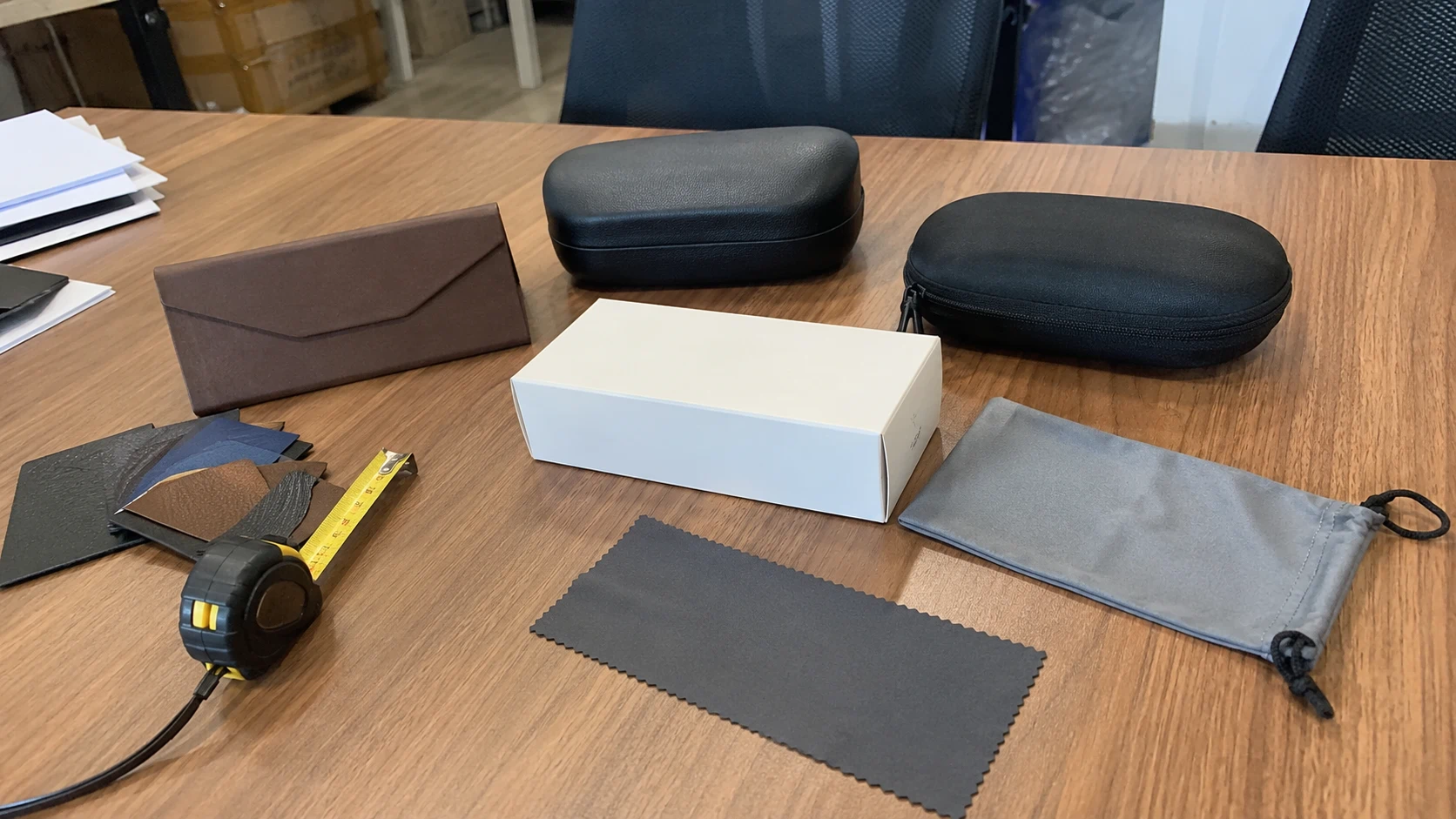
A case combines a shell, supporting geometry, lining, closure and manufacturing joints. A metal-reinforced case may resist local deformation but still contain an exposed edge. A formed EVA construction can provide shape and cushioning, yet its protection depends on thickness, geometry and assembly. A folding case offers storage convenience, but its panels and closure must be checked in the fully assembled state. Material names alone do not establish comparative performance.
Start with the intended use: storage in a handbag, optical-store handover, travel or another defined setting. Discuss foreseeable loads and misuse with the supplier. Do not describe a product as crush-proof, waterproof or suitable for a stated load without evidence supporting that exact construction and claim.
3. Map contact points before approving the lining
Inspect where the nose bridge, rims, temples and lenses approach the interior. Look for lining joins, raised adhesive, fasteners, hinge hardware and rough edges. Check with the lid partly closed as well as fully closed: interference can occur during the closing movement even when the final position appears acceptable.
Softness is only one property. Loose particles or debris can create abrasion risks, while a loose frame can repeatedly move against a local feature. Review cleanliness, exposed substrate, loose fibers and construction consistency. Specify an inspection method and acceptable appearance using agreed reference samples.
Lens care also matters after purchase. ZEISS explains that particles on unsuitable wiping materials can cause micro-scratches and describes appropriate microfiber cleaning methods. This supports careful attention to cleanliness; it does not prove that every scratch found after storage originated in the case. Avoid treating a customer complaint as a confirmed root cause without examining both products.
4. Build a sample review that another inspector can repeat
Identify each sample by model, revision, material, finish and date. Photograph the frame orientation and keep the eyewear used for approval identifiable. For functional checks, record the starting condition, procedure and observations. Replace instructions such as “check quality” with a clear description of what to examine.
- Fit: place each agreed frame in the case and close it naturally. Record rocking, interference and unexpected resistance. Do not force the closure.
- Contact: inspect accessible contact areas before and after the agreed handling sequence, using consistent lighting and documented photographs.
- Closure: agree opening and closing conditions and the number of cycles appropriate to the intended use. Inspect alignment, hinge behavior, lining separation and closure retention.
- Finish: compare color, surface texture, logo location and workmanship with the approved reference. Define how differences will be judged.
- Odor: record packaging condition, time since unpacking and assessment conditions. A subjective odor check is not a chemical compliance test.
Agree pass/fail criteria before production. A dimensional tolerance needs a defined measuring location and method; a cycling requirement needs a defined sequence and failure condition. If numerical limits are needed, develop them for the design and use case with the supplier or a qualified laboratory.
5. Validate shipping protection separately
The eyewear case, its individual wrap, dividers and master carton form a shipping system. A satisfactory case sample does not establish that a fully packed carton will survive distribution. Record units per carton, orientation, dividers, carton specification, gross weight and sealing method before transport testing.
ISTA distinguishes screening procedures from simulations intended to represent distribution hazards. Select a procedure with a competent laboratory based on the actual packaged product and shipping route. A casual drop demonstration is not equivalent to completing a named ISTA procedure. Keep the test configuration and report traceable to the production pack.
6. Turn the approved sample into a production specification
The approval package should include the drawing revision, material description, color references, artwork version, logo position, closure details, lining construction, packing specification and agreed inspection criteria. Keep signed reference samples with both parties and specify which document governs if a photograph, drawing and sample disagree.
Ask the supplier to identify proposed substitutions before production. A different lining, adhesive, substrate or process can affect fit, appearance and behavior. Reassess the affected characteristics when a change is approved. For batch inspection, agree the lot definition, sampling method, defect classifications and response to a failed inspection rather than assuming a sampling number guarantees zero defects.
Questions to include in your next brief
Which frame families must fit? What storage orientation is intended? Which areas must avoid contact? What closure and surface requirements matter? How will the product be packed and shipped? Who approves changes? Providing these answers makes quotation and sample development more useful than sending an inspiration photograph alone.
Explore TOPYOU eyewear packaging styles and send your frame dimensions, application and quantity for a project-specific review. Available structures, materials and validation requirements should be confirmed for the selected model.
References and further reading
- ZEISS: cleaning and caring for glasses — lens-care context.
- ISTA: test procedures — selecting packaging test approaches.
- Eyewear-user discussion about cases and scratches — anecdotal questions that inform the inspection checklist, not test evidence.
YOUR NEXT STEP
Turn your packaging brief into a clear plan.
Share your preferred style, quantity, materials and destination. Our team can help confirm the options for your project.
Discuss your project