In this guide
The price of custom eyewear packaging comes from a set of decisions: the case structure, materials, quantity, branding, accessories and delivery plan. A useful quote connects each cost to a written specification. Comparing two unit prices without that specification can hide important differences.
Start with the complete cost
Ask for a quotation that separates the product price from development, sampling, tooling and shipping. Confirm what is included before choosing the lowest number. An inexpensive case can become a costly project if the quote excludes the box, logo setup or destination delivery.
Choose the structure and quantity first. Then confirm materials, logo processes, accessories and packing. Compare shipping only after the packed dimensions and destination are known.
The eight decisions that affect your quotation
| Cost factor | What can change the price | What to confirm |
|---|---|---|
| Structure | Layers, hinges, magnets, zippers and assembly steps | Existing model or new development? |
| Dimensions | Material usage and carton volume | Internal clearance with your actual frames |
| Materials | Surface finish, backing, lining and sourcing | Approved samples and exact material specification |
| Quantity | Setup costs shared across more or fewer units | Quantity per style, color and logo version |
| Branding | Tooling, positions, colors and decoration method | Artwork size, placement and any separate setup fee |
| Accessories | Cloths, pouches, inserts, boxes and bags | Exactly which components the quote includes |
| Development | Samples, molds, revisions and testing | One-time charges and approval milestones |
| Delivery | Carton size, weight, route and delivery terms | Destination, scope, validity and exclusions |
1. Choose the structure before the decoration
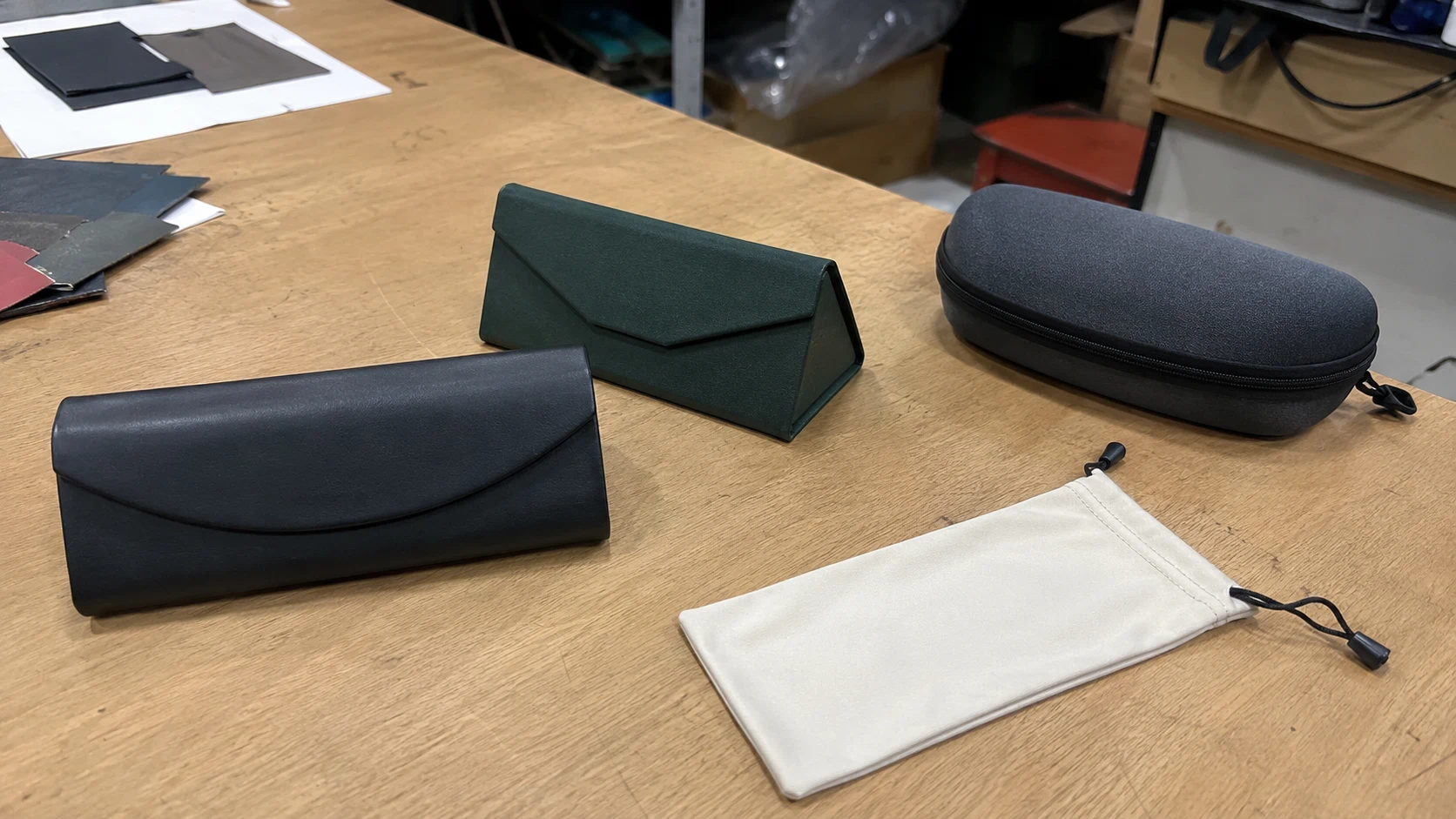
A pouch, rigid case, foldable case and EVA zipper case solve different protection and presentation needs. They also require different components and production steps. An existing structure can reduce development work while still allowing changes to color, lining and logo.
Fit matters as much as appearance. Send the width, height and folded thickness of the eyewear, or arrange a physical fit sample. Extra depth can increase material use and shipping volume; insufficient clearance can compromise protection.
2. Specify materials rather than relying on names
Two materials described as PU leather may differ in backing, coating, thickness and finish. A photograph cannot establish those properties. Request a material sample and identify the chosen grade in the approved specification.
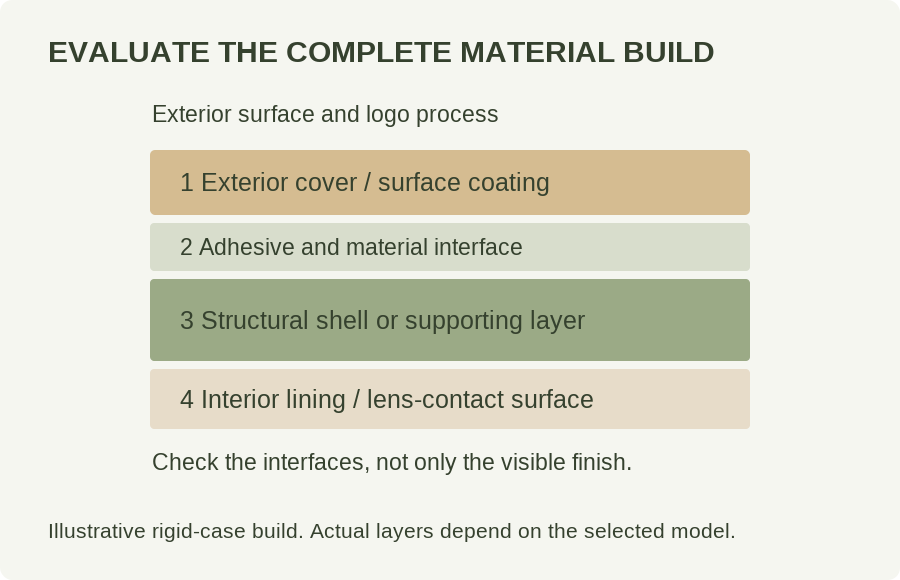
Consider the lining, adhesive and decoration process together. A surface that looks attractive may not reproduce a small logo clearly, and a lining must work with the selected construction. Review the combination in a physical sample before production.
For recycled-content or market-specific requirements, ask which documentation applies to the selected material and product. A general sustainability statement is not a substitute for the relevant evidence.

3. Confirm quantity for each version
Setup and development costs are spread across the order. A larger quantity can improve the unit price, but it also increases the initial investment and inventory exposure. The right quantity depends on the project, rather than on price alone.
Specify how an order is split across styles, colors, materials and logo versions. A total of 1,000 pieces divided between several versions is different from 1,000 identical cases. Confirm whether the minimum order applies to each version.
TOPYOU presents selected small-batch case programs starting from 500 pieces and full-custom programs generally starting from 3,000 pieces. Availability and the final minimum must be confirmed for the chosen model and specification. See the small-batch catalog for the current program.
4. Keep the logo process focused
Embossing, foil stamping, screen printing and metal badges have different tooling and production requirements. Provide vector artwork, logo dimensions, colors and placement. Ask whether setup is included or charged separately; do not assume that a standard process is free for every order.
One well-executed branding detail can be more effective than several competing finishes. Approve logo clarity, position and contrast on the actual material, not just in a digital mockup. Explore materials and branding options before finalizing the brief.

5. Separate sampling, production and delivery
Sample charges and schedules are confirmed for the specific project. New tooling, unusual materials, extra components and revisions can change both. A digital preview helps plan appearance, but a physical sample is needed to evaluate fit, feel, closure and construction.
Ask for the production schedule after sample approval, and allow separately for inspection and transport. Avoid treating an indicative lead time as a guaranteed arrival date. Confirm the current scope and schedule in the quotation.
For shipping, provide the destination country, postal code and delivery-address type. Request the packed carton count, dimensions and gross weight. Those figures make delivery comparisons more useful than a freight estimate based only on the number of cases.
Prepare a brief that suppliers can quote consistently
- Product type and reference style
- Frame dimensions or a physical fit sample
- Quantity per style, color and logo version
- Exterior material, lining and color references
- Logo artwork, size, position and process
- Boxes, cloths, inserts and other accessories
- Quality and documentation requirements
- Destination, delivery terms and target date

Turn a price inquiry into a technical specification
A useful specification records the usable internal space after the lining, hinges, magnets and other components are fitted. External case dimensions are useful for packing, but they do not establish whether a particular frame fits. Measure the eyewear in its folded condition and identify the largest frame in the collection.

During the sample review, check the bridge, lens edges and folded temples for contact with hard parts. Close the case without forcing it and check the path of the lid, zipper or magnetic flap. Record any compression or movement that could damage the frames. Agree the required clearance with the supplier using the actual eyewear; there is no single clearance allowance suitable for every structure.
The specification should name the exterior cover, backing or shell, lining and assembly method. A “PU case” description is too broad for a meaningful comparison. The coating, backing, shell and adhesive interfaces can affect the construction independently.
Worked example: spread one-time costs across the order
The following figures are invented to demonstrate the calculation. They are not TOPYOU prices, freight rates or import-tax estimates for a real destination. Each actual line must come from an agreed quotation or verified assessment.
| Illustrative cost line | 1,000 units | 2,000 units |
|---|---|---|
| Product price | $2.20 × 1,000 = $2,200 | $2.00 × 2,000 = $4,000 |
| Samples and setup | $200 | $200 |
| Export packing | $60 | $110 |
| Freight | $400 | $650 |
| Import-cost allowance | $170 | $300 |
| Final delivery | $70 | $90 |
| Total example cost | $3,100 | $5,350 |
| Example cost per unit | $3.10 | $2.675, approximately $2.68 |
The larger order has a lower cost per unit in this example, but it requires a larger total outlay. That is why the purchasing decision also needs a sales forecast, storage plan and expected repeat-order date. A lower unit cost does not remove the risk of holding excess packaging.
Check for double counting. A delivered quotation might already include a freight or delivery line that appears separately in another proposal. Accessories may also be bundled into one supplier’s case price and excluded by another.
Approve a sample against measurable criteria
| Review area | Evidence to record | Approval question |
|---|---|---|
| Fit | Frame identification, dimensions and fit photographs | Does the intended eyewear fit without forcing the closure? |
| Appearance | Material codes, color references and approved sample | Which variations are acceptable? |
| Branding | Artwork revision, position and process | What size, alignment and finish must production match? |
| Construction | Edges, lining, closure and component assembly | Which defects require correction or rejection? |
| Packing | Pieces per carton, dimensions and gross weight | Is the quotation based on this packing arrangement? |
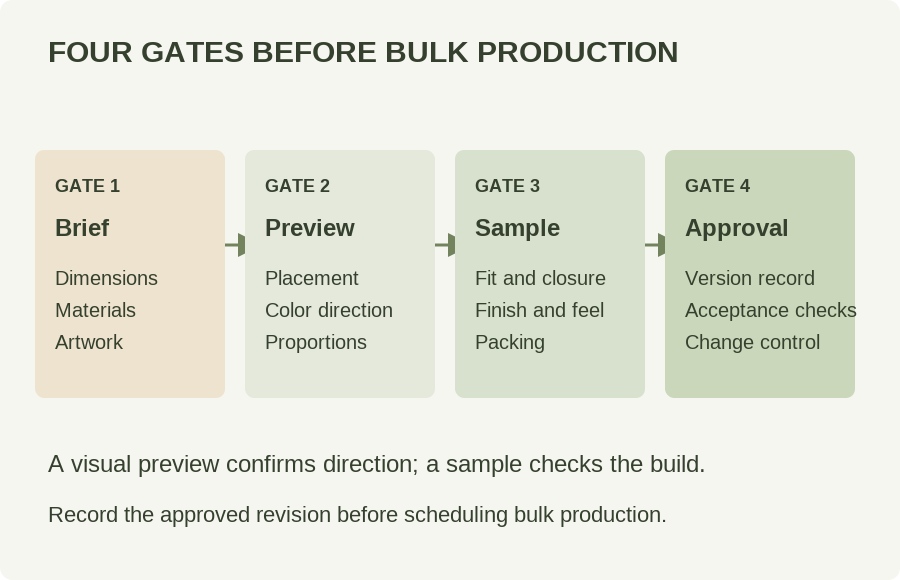
Use one approval record to connect the sample, drawings, material codes and quotation. Changes after approval should identify the affected specification, cost and schedule. This makes later discussions about a batch difference more precise than relying on a photograph or an informal message.
Compare the scope, then compare the price
Use the same specification for each supplier. Check whether the quote includes tooling, samples, branding, individual packing, export cartons, testing and transport. Record exclusions and quote validity in writing.
The approved sample and inspection criteria should describe what acceptable production looks like. For documentation and inspection planning, review the quality and testing overview. A clear brief and approval process provide a stronger basis for cost control than selecting the cheapest unit price alone.
YOUR NEXT STEP
Turn your packaging brief into a clear plan.
Share your preferred style, quantity, materials and destination. Our team can help confirm the options for your project.
Discuss your project