In this guide
The Bulk Ordering Dilemma: Why Brands Bleed Margins on Packaging
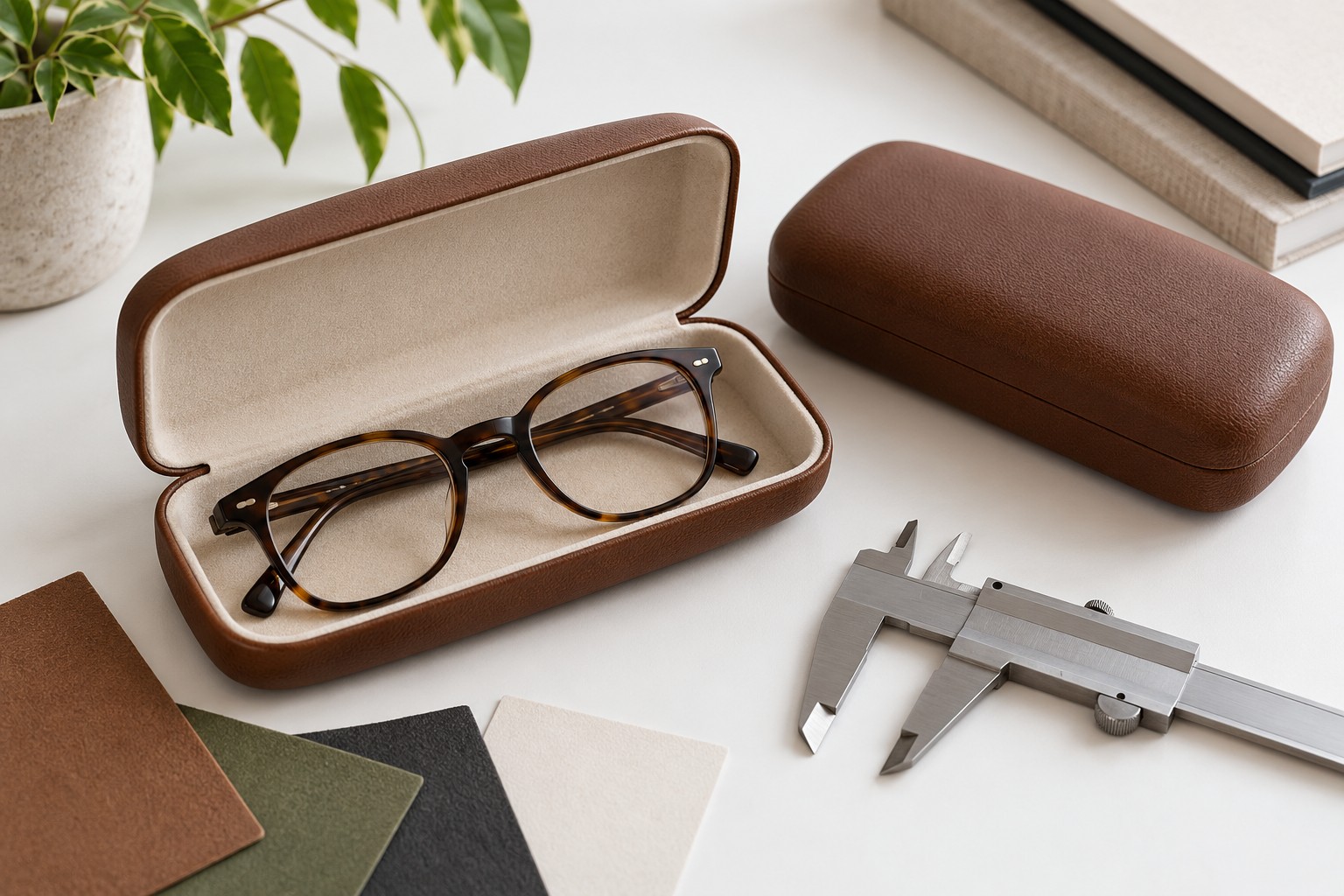
In the competitive landscape of eyewear retail, packaging is often relegated to an afterthought, yet it remains a silent killer of profit margins. Many brands rush into bulk orders for custom eyewear packaging without conducting a proper cost-benefit analysis, leading to two extremes: either spending too much on over-engineered designs that erode margins or opting for subpar eyeglass packaging that results in high product damage rates during shipping.
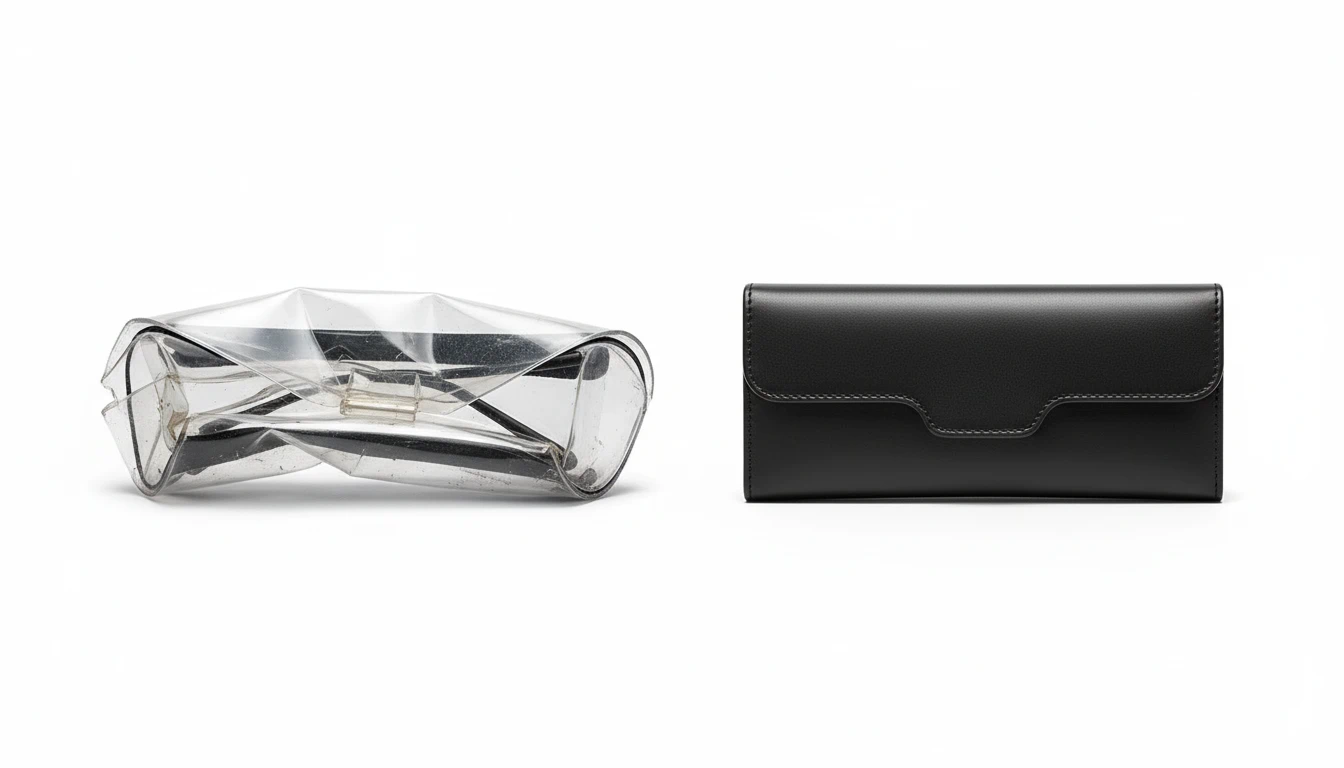
Statistics indicate that roughly 15% of eyewear returns in e-commerce are directly attributed to damaged goods caused by inadequate protective packaging. This reflects a fundamental misconception: that the cheapest unit price equates to the lowest total cost. In reality, a cheap box that fails to protect your frames is the most expensive mistake a brand can make. TOPYOU understands that strategic procurement is about balancing aesthetic appeal with structural integrity to ensure every unit delivers value.
A savvy brand manager knows that the true cost includes not just the purchase price, but the downstream costs of logistics, returns, and brand perception.
Where Does Your Eyewear Packaging Budget Actually Go?
Material Sourcing vs. Tooling Costs
When partnering with a professional glasses case manufacturer, a significant portion of the initial investment is dedicated to tooling and mold development. For smaller batches, these fixed costs are amortized over fewer units, making the per-unit price appear high. However, as you scale to bulk production, these costs diminish significantly, allowing for higher-quality materials. A common industry insight is that the “sweet spot” for production efficiency usually begins at 3,000 units. By choosing a partner with extensive experience, you can leverage their existing library of 1,500+ designs to avoid unnecessary custom tooling costs entirely.
The Hidden Costs: Dimensional Weight and Freight (CBM)
Another frequent mistake is ignoring the impact of “Dimensional Weight.” Eyewear boxes, particularly rigid clamshell styles, occupy significant space in shipping containers. If your packaging design is not optimized for nesting or flat-folding, you are essentially paying to ship “air.” Logistics data shows that optimizing your box dimensions by just 10% can reduce container freight costs by up to 15%. This is a crucial area where smart design choices prevent your logistics budget from ballooning, ensuring that your wholesale eyeglass cases remain economically viable even when shipping internationally. Transitioning into how to manage these physical constraints requires a deeper look at the materials themselves.
Material Showdown: Balancing Durability, Aesthetics, and Price
Classic Clamshell Hard Cases vs. Flat-Folding Cases
The debate between protection and efficiency is ongoing. Clamshell cases offer the ultimate defense for high-end frames, yet their rigid form factor is a logistical hurdle. Conversely, flat-folding cases represent a revolution in shipping efficiency, as they can save up to 60% of storage space. However, the trade-off is often a perceived reduction in “luxury.” For brands focused on private label eyewear packaging, the decision rests on the product’s price point. If you are selling premium eyewear, the protection offered by a rigid structure is non-negotiable. If you are a high-volume retailer, the shipping savings of a folding case often outweigh the slight aesthetic compromise.
Premium PU Leather vs. Recycled PU (RPET)
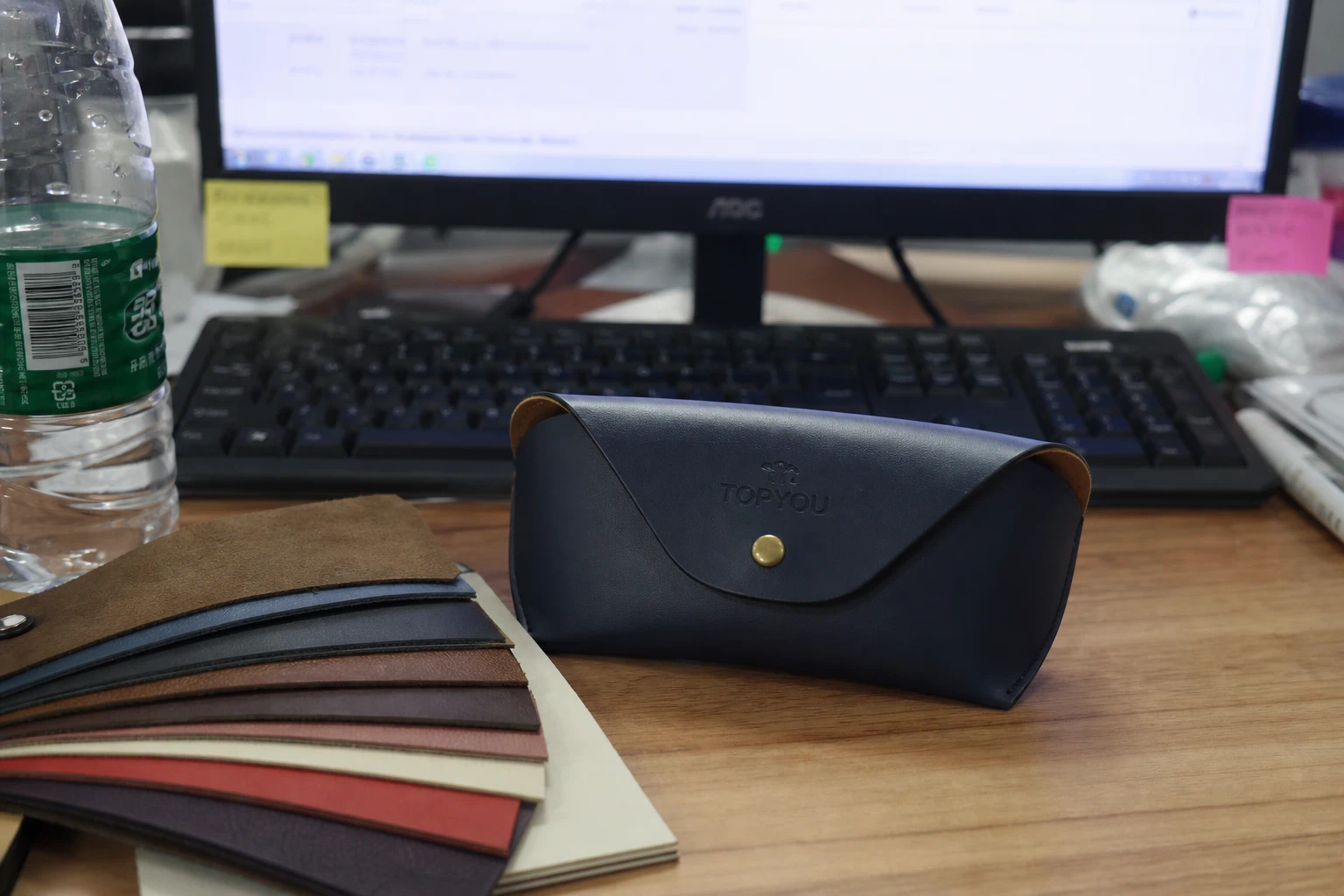
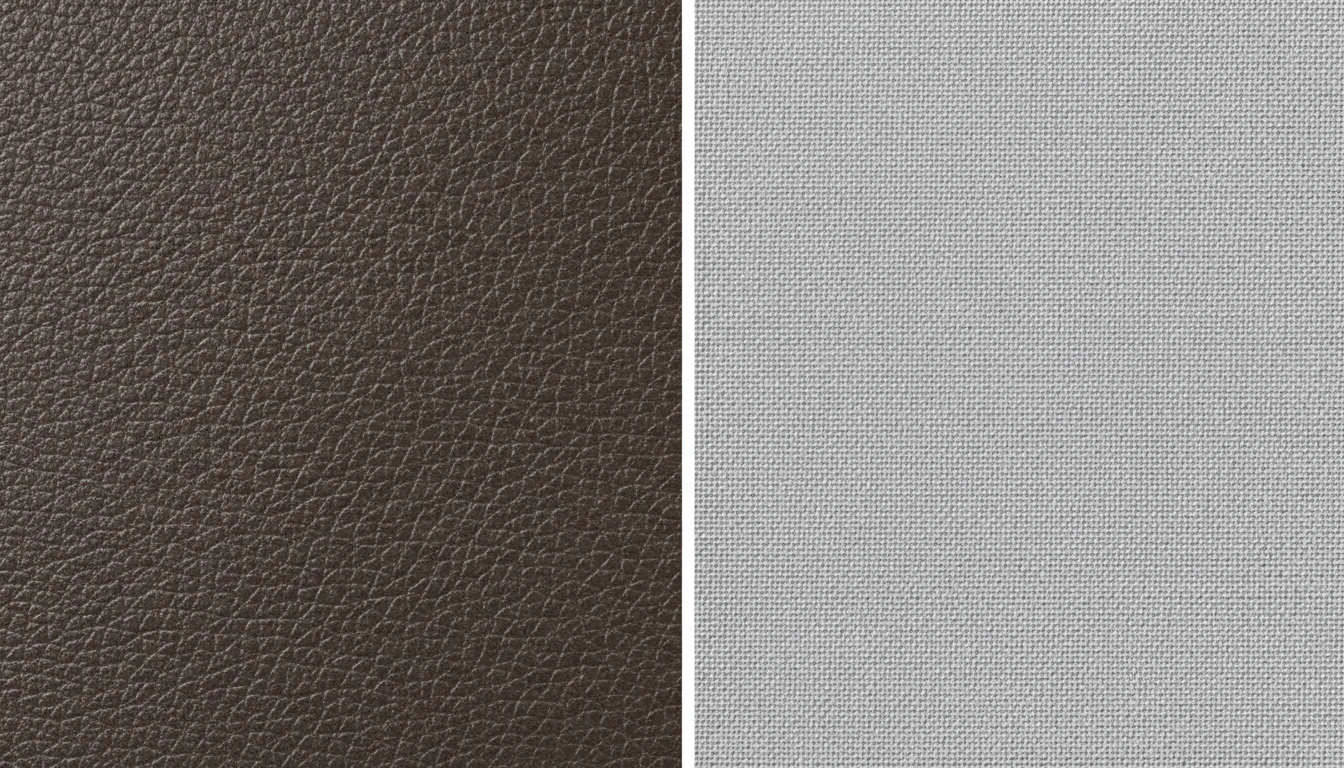
Sustainability is no longer optional; it is a market requirement. Using RPET materials (Recycled Polyethylene Terephthalate) not only satisfies international standards like REACH and RoHS but also aligns your brand with the growing global green consumer movement. Interestingly, high-quality recycled PU can look and feel identical to virgin materials. By opting for sustainable options, you aren’t just saving the planet; you are adding a marketing hook to your product that appeals to modern, eco-conscious consumers. This is how a custom logo eyeglass case becomes more than just a container—it becomes a brand statement.
Microfiber Pouches & Cloths: The Low-Cost Add-ons
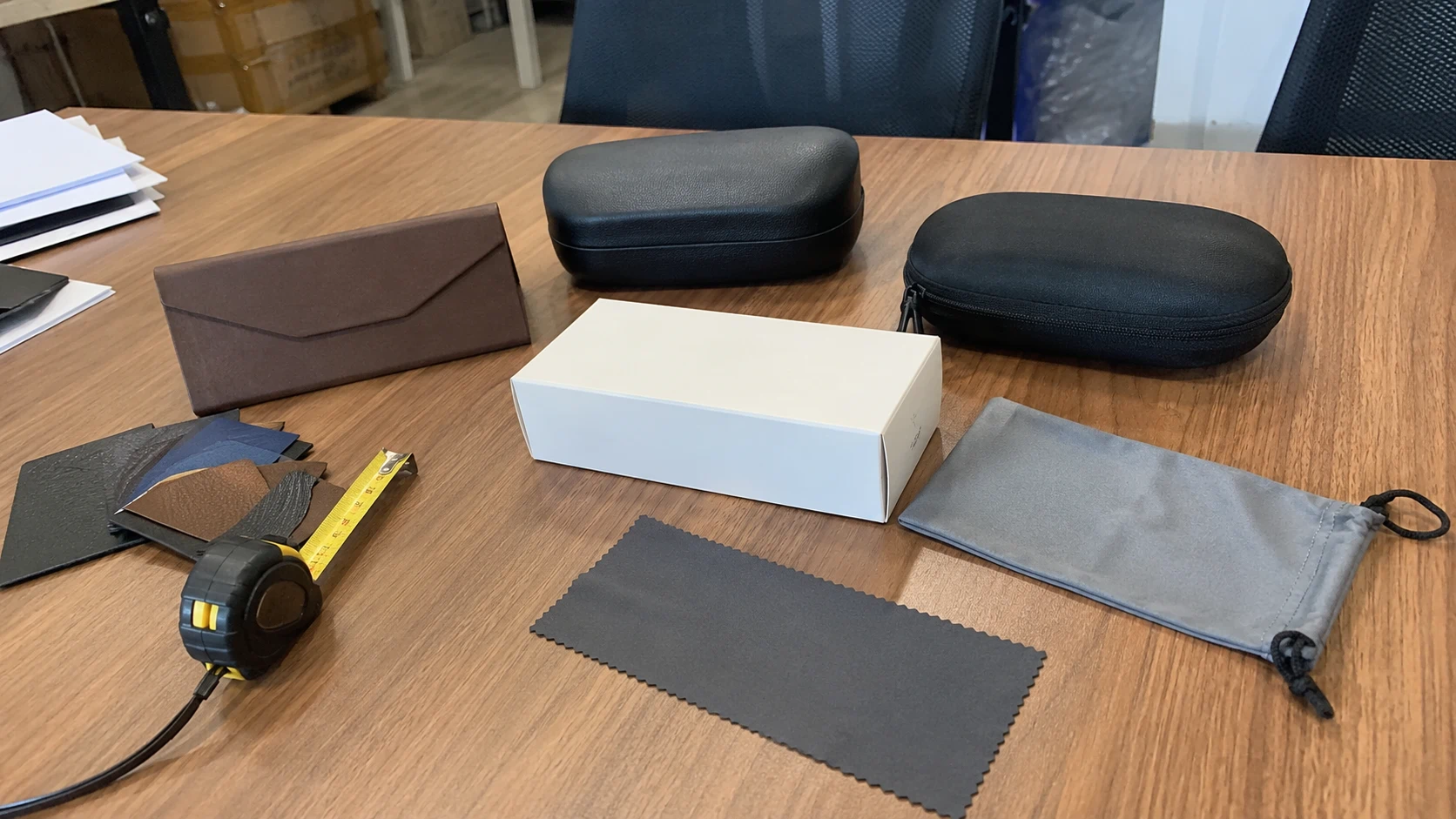
Never underestimate the power of the “unboxing experience.” Including a high-density, branded microfiber cloth or a plush pouch creates a perception of premium value that far exceeds the pennies it costs to produce. These small items protect the lenses from scratches while serving as a constant brand reminder. By integrating these into your custom eyewear packaging strategy, you maximize the customer’s perception of “Quality” without significantly increasing your per-unit costs. These minor touches are what separate a generic product from a curated brand experience, which is particularly vital for the strategies we will discuss next.
Scenario-Based Sourcing: Matching Packaging to Your Retail Strategy
Strategy for D2C E-commerce Eyewear Brands
Direct-to-Consumer (D2C) brands face the highest risk of shipping damage. Because your product travels through various distribution hubs, your custom eyeglass packaging manufacturer must prioritize crush-resistant designs. We recommend a “layered” approach: an impact-resistant rigid box, paired with a soft pouch, all housed within an eco-friendly mailer. This setup minimizes returns while maintaining a premium feel. For D2C, speed and reliability are your brand’s currency.
Strategy for High-End Boutiques & Optical Chains
For retail settings, the focus shifts from “protection” to “presentation.” Boutiques require consistent, high-end packaging that reinforces the brand identity on the shelf. Here, the investment in a cohesive suite—including branded hard cases, organizers, and high-quality shopping bags—is justified by higher conversion rates. When a customer walks out of your store, the packaging they carry is an extension of your shop’s prestige. This level of brand consistency is a hallmark of successful chains. As you implement these strategies, it’s vital to learn how to keep costs in check without sacrificing that high-end look.
Pro Tips: How to Cut Manufacturing Costs Without Looking Cheap
Optimize Structural Design Early
The most effective way to lower costs is through design optimization. Before going to production, review your designs to eliminate unnecessary features like complex hidden magnets or multi-layered textures that don’t add functional value. A well-designed, minimalist case often communicates more luxury than an over-decorated one. By working closely with your OEM eyewear packaging partner, you can ensure that your design is optimized for efficiency from day one, reducing material waste and assembly time.
Leverage MOQs and Standardized Colors
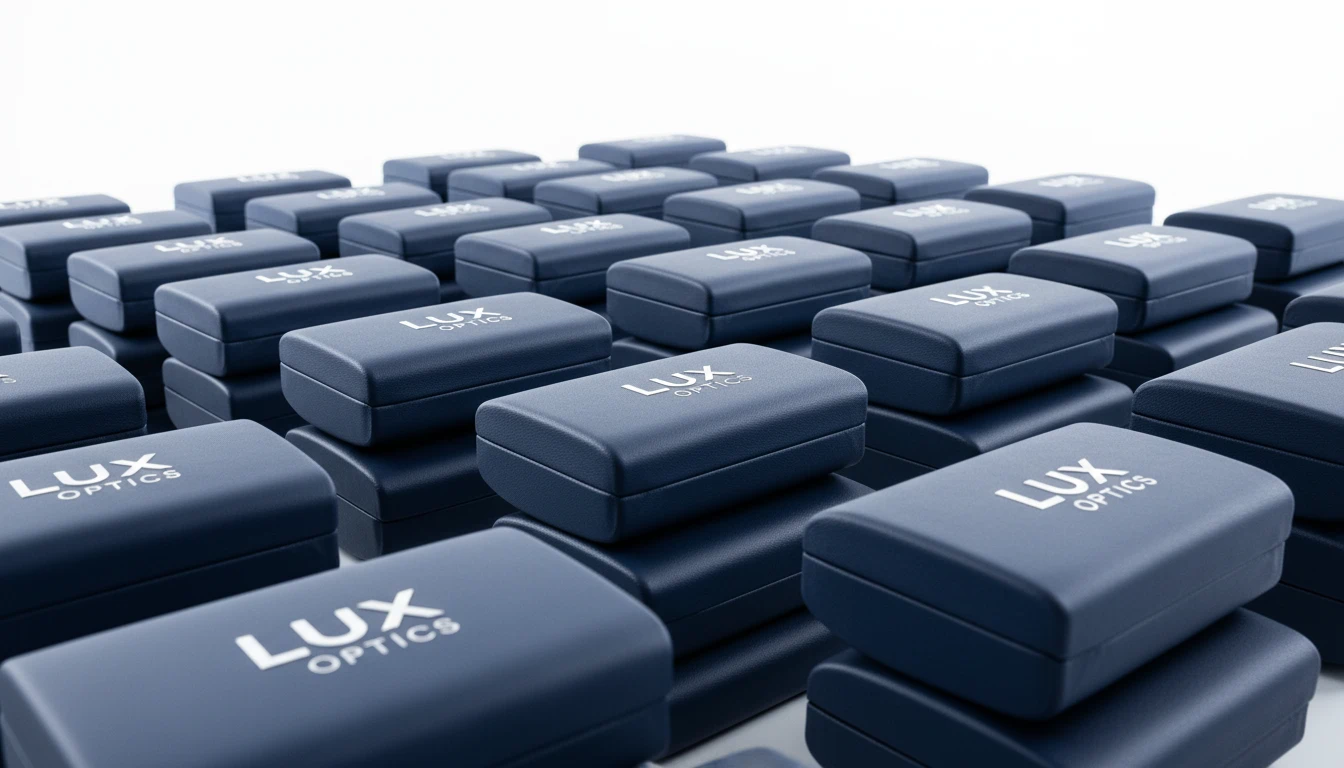
Understanding the price tiers of your manufacturer is a powerful negotiation tool. Most factories offer significant cost breaks at 3,000, 5,000, and 10,000+ units. If you are ordering near a threshold, it is almost always more cost-effective to increase your order size to reach the next price tier. Furthermore, using standardized colors for internal linings while keeping the exterior custom-branded allows you to maintain a unique identity without paying for “bespoke” color development. By intelligently layering your budget, you ensure that every dollar spent is visible to the end customer. This meticulous approach is exactly what a manufacturer with 19+ years of industry experience like TOPYOU brings to the table.
Secure Your Supply Chain with a 19+ Years Packaging Expert
Navigating the complexities of the eyewear packaging market requires more than just a vendor; you need a strategic partner. At TOPYOU, we have spent 19+ years refining our craft, helping global brands balance the delicate equation of cost, quality, and sustainability. Whether you are looking for an OEM eyewear packaging solution that protects your frames during international transit or a high-end branding suite that elevates your retail presence, we have the expertise to deliver. With over 1,500 customizable designs and a commitment to international standards like RoHS and REACH, we transform packaging from a logistical expense into a powerful brand asset. Our capability to handle everything from small, agile batches to large-scale global fulfillment ensures that your supply chain remains robust and responsive to market trends. Don’t let packaging bottlenecks slow down your growth—partner with a team that understands the nuances of the eyewear industry. Contact us for custom eyewear packaging solutions tailored to your brand.
YOUR NEXT STEP
Turn your packaging brief into a clear plan.
Share your preferred style, quantity, materials and destination. Our team can help confirm the options for your project.
Discuss your project