In this guide
A small order does not automatically avoid development costs. The practical question is which parts of the project can use an existing structure, material and process, and which parts require something new. Separate minimum quantity, tooling and setup before asking a supplier to reduce the price.
Identify what is actually being customized
| Change | Possible development work | What to ask |
|---|---|---|
| Logo on an existing model | Artwork review and process-specific setup | Is the proposed method and size supported? |
| Different cover or lining | Material sourcing and construction review | Can an available material be used, and is resampling needed? |
| New color | Color sourcing or material production | What is the minimum for that material and color? |
| Changed dimensions | Drawings, pattern, die or mold assessment | Does an existing tool still suit the structure? |
| New closure or component | Component sourcing and assembly review | Which interface and functional checks change? |
| Completely new structure | Engineering, tooling and prototype development | What are the development gates and charges? |
Different structures use different tools. A cutting die, decoration tool and molded component tool are not the same item. Ask the supplier to identify the actual tooling required rather than accepting one unexplained “mold fee.”
Start with the frame envelope and existing models
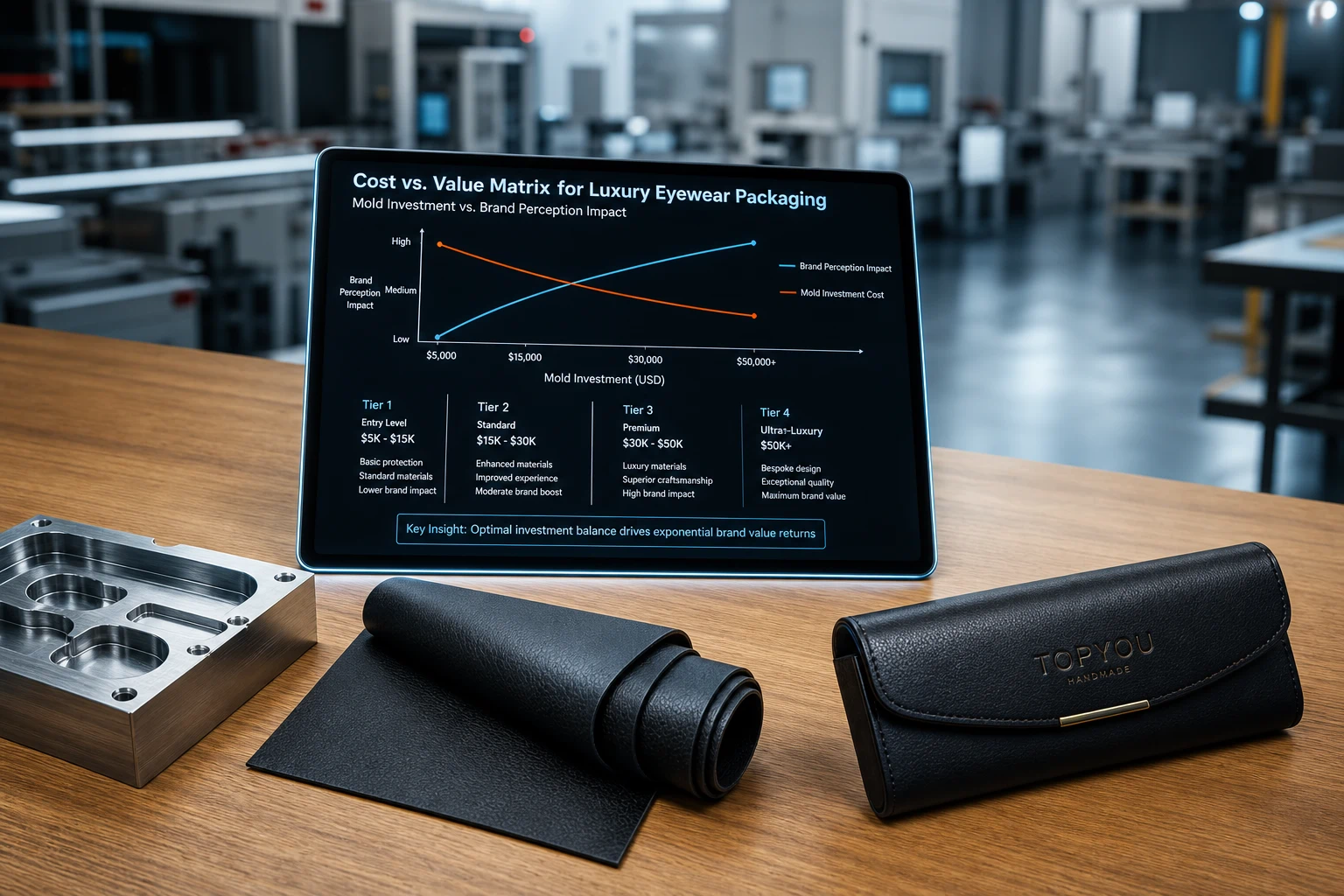

Measure the eyewear in its folded condition and identify the largest or most difficult frame to fit. Compare existing models using their usable internal space. The case’s outside dimensions and a photograph are not sufficient to establish fit.
An existing model that fits can sometimes avoid structural development while still offering a brand-specific cover, lining or logo. Confirm the changes allowed for that model and the minimum for each version. The small-batch catalog is a starting point for that discussion, not a promise that every combination has the same minimum.
Separate three different minimums
Product minimum: the supplier’s minimum for producing the selected case version. Material minimum: the amount required to source or make a particular cover, lining or color. Process minimum: the practical minimum or setup scope for a decoration or component process.
A small total order can still be constrained by the material minimum if it uses several custom colors. For example, dividing a hypothetical 500-unit order into four colors does not mean the supplier can automatically purchase materials for 125 units of each color. Ask which input determines the minimum and whether an available material offers a workable alternative.
Understand how setup changes cost per unit
Separate recurring product cost from one-time development or setup. For an illustrative setup charge of $180, allocation across 500 units is $0.36 per unit; across 1,500 units it is $0.12. These figures show the arithmetic only and are not a TOPYOU tooling quotation.
The allocation does not establish the best order size. A larger quantity can increase stock and cash requirements even when the unit allocation falls. Compare the complete project cost and the demand you expect, not just the setup cost divided by a larger number.
Ask for an itemized tooling and setup record
| Record | Why it helps |
|---|---|
| Tool or setup description | Identifies the process and component it supports |
| Drawing or artwork revision | Connects the tool to the approved specification |
| Development scope | Clarifies prototypes, adjustments and included revisions |
| Commercial arrangement | Records the agreed ownership, retention and future-use terms |
| Repeat-order scope | Clarifies which charges recur and which changes trigger new setup |
Do not assume that paying a tooling line automatically defines ownership or access. Agree those commercial details expressly with the supplier. Also confirm what happens if the artwork, material or dimensions change in a repeat order.
Use a staged approval process
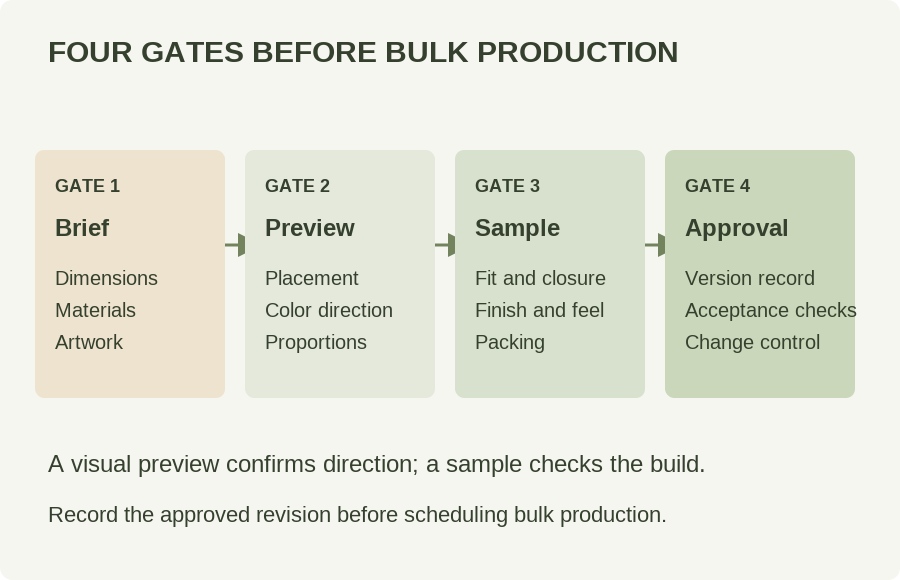
First confirm the structure and required changes. Then review the artwork and material direction. Finally inspect the physical sample with the actual frames, recording fit, finish, closure and packing. If the sample uses a substitute material or component, list the differences and close them before production approval.
A “no tooling” proposal still needs a clear specification. It may mean an existing structural tool is reused while logo setup or other charges remain. Ask the supplier to explain precisely which development work is avoided and which work is included.
Control the number of variants in the first run
For an initial market test, consider whether one structure and a focused set of versions can serve the launch. Changes to the outer sleeve, cloth or branding may offer a different presentation without developing a completely new case, depending on the project.
Request alternatives with the same required fit and protection standard. Compare the material availability, sample work, unit price, setup and packed volume of each. The cost guide explains how those lines fit into a complete quotation.
Send the selected model, frame dimensions, quantity per version and logo artwork through the contact page. A well-defined brief gives the team a basis for identifying a practical existing-model route or the development work that is genuinely required.
YOUR NEXT STEP
Turn your packaging brief into a clear plan.
Share your preferred style, quantity, materials and destination. Our team can help confirm the options for your project.
Discuss your project