In this guide
A low minimum order can help an eyewear brand test packaging before committing to a larger run. The key is to distinguish a selected small-batch model from a completely new design. Both can carry your branding, but their development work and sourcing requirements differ.
Choose the right starting point
| Program | Best starting point | What to confirm |
|---|---|---|
| Selected small-batch cases | An existing structure with focused material or branding changes | Available models, colors, processes and minimum per version |
| Full-custom development | A new structure or a coordinated packaging system | Tooling, material minimums, development schedule and sample scope |
| In-stock display products | An available display or storage model | Current stock, quantity and any customization limits |
TOPYOU lists selected small-batch case programs starting from 500 pieces, while full-custom case programs generally start from 3,000 pieces. These are program starting points, not a promise that every model, material and color combination is available at that quantity. Check the current catalog and request confirmation for your specification.
Evaluate the sample before evaluating the sales pitch
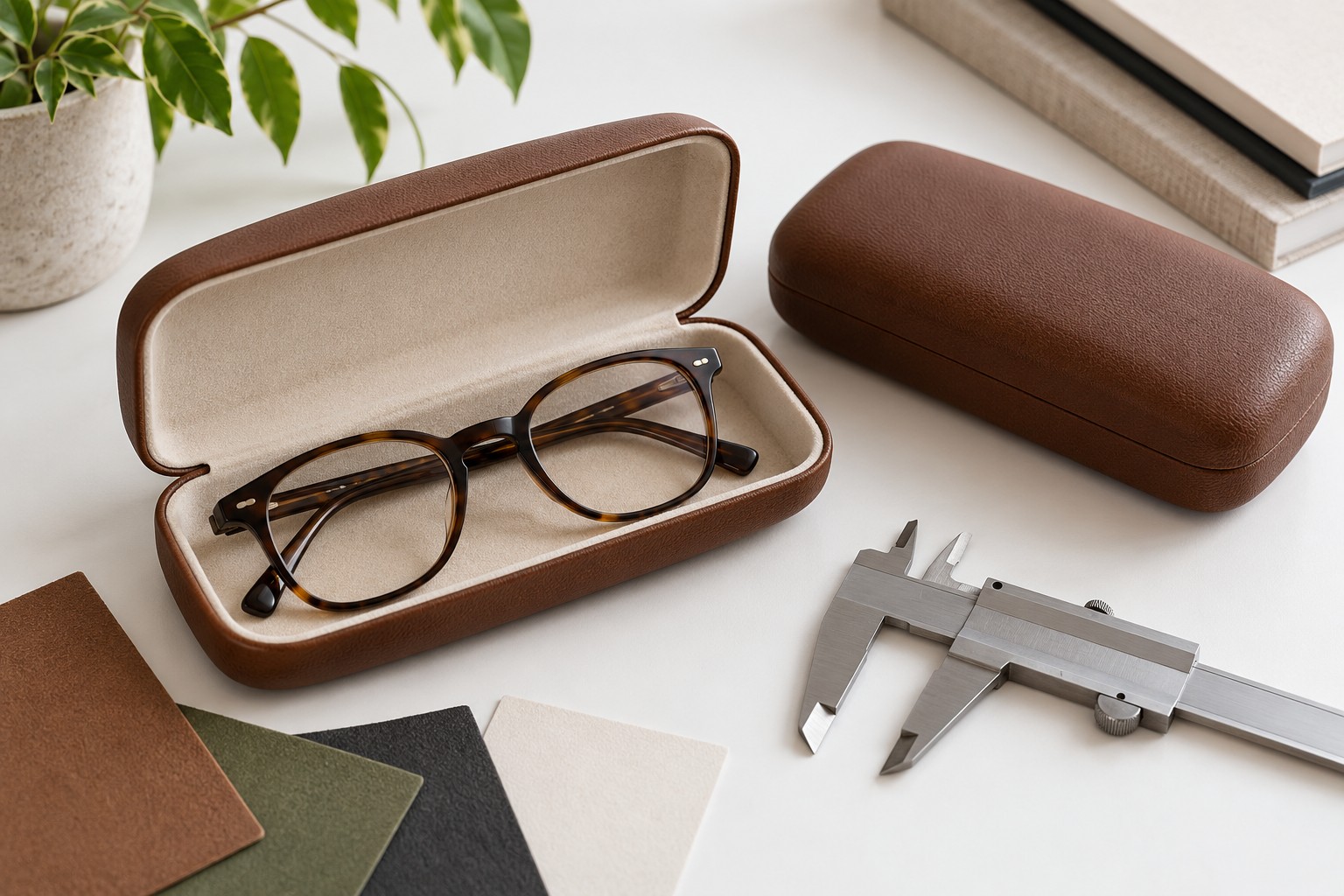
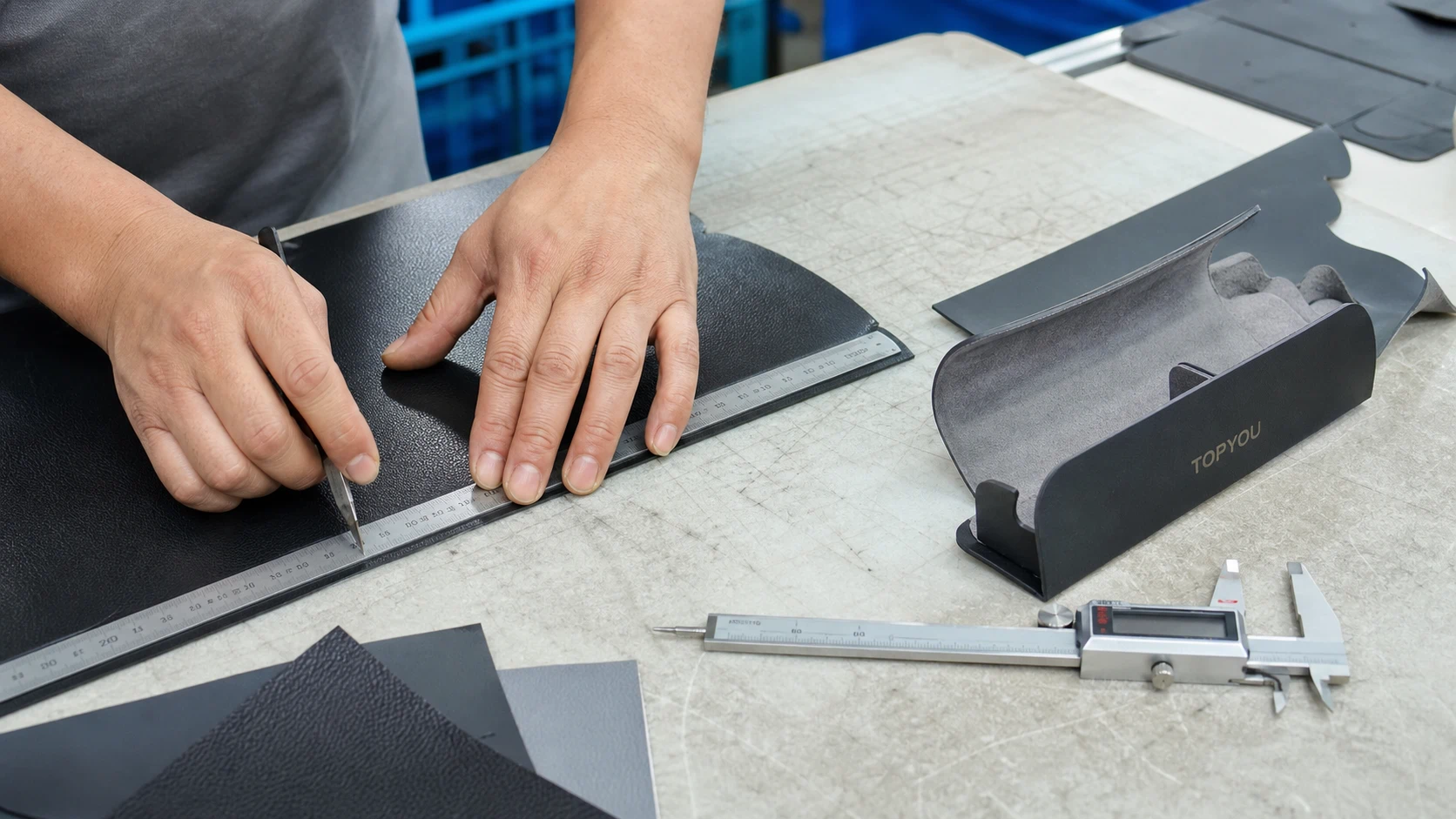
A supplier’s photographs can help you shortlist styles, but they do not establish the fit or construction of your own order. Review a sample with your eyewear and your proposed material and logo process.
- Internal clearance around the frames and folded temples
- Closure feel and stability
- Lining, exposed edges and adhesive finish
- Logo clarity, placement and contrast
- Consistency with the approved material and color
- Individual packing and outer-carton arrangement
Ask what the minimum applies to
The minimum may apply to a style, color, material or logo version. One order divided across several versions can require separate preparation work. Ask the supplier to confirm the quantity for each version and explain any additional setup charges.
Reducing initial complexity can make a smaller order more practical. Start with one proven structure, a limited color palette and one clear branding process. Add further versions after you have evidence of demand.
Make customization specific
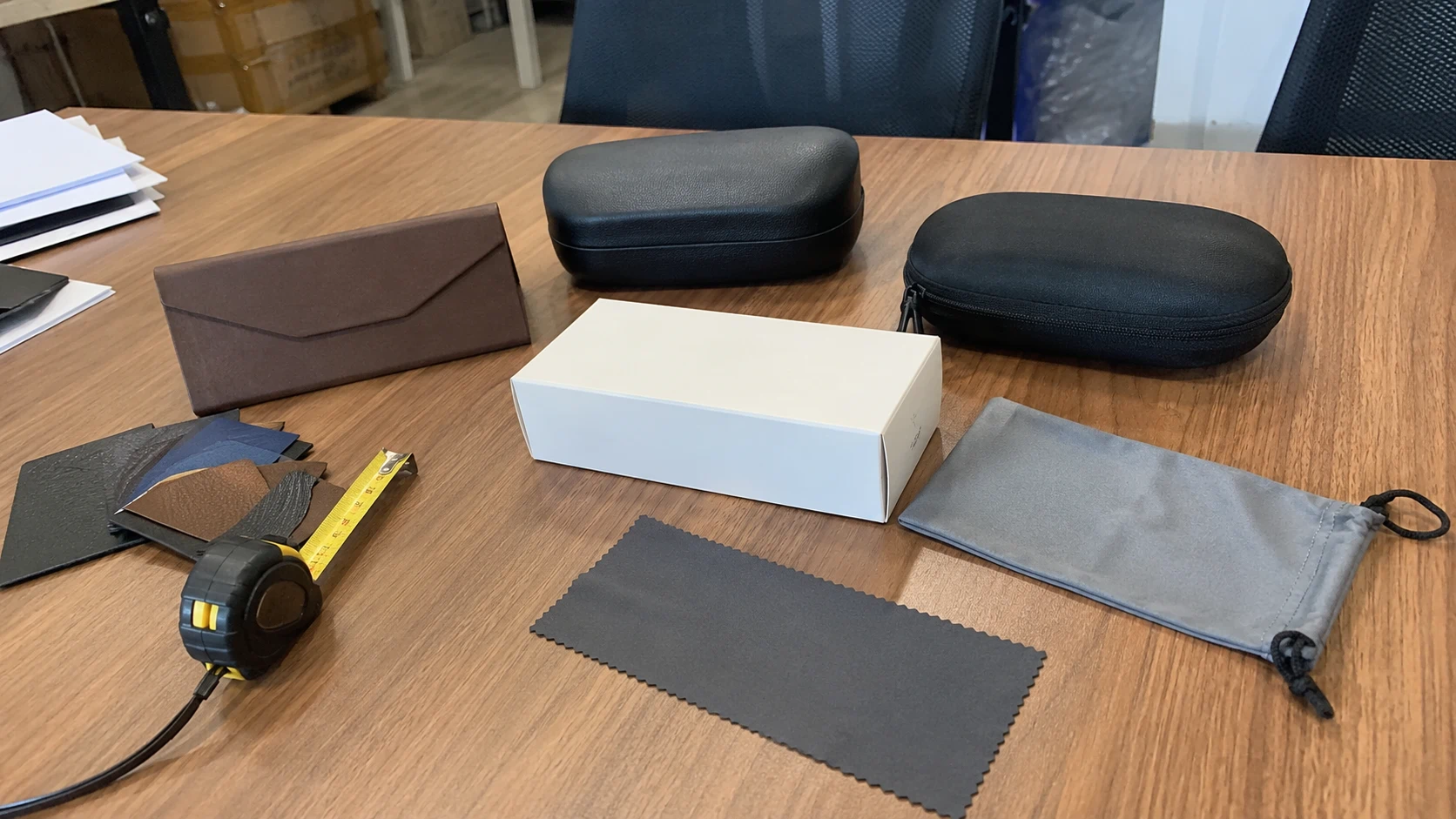
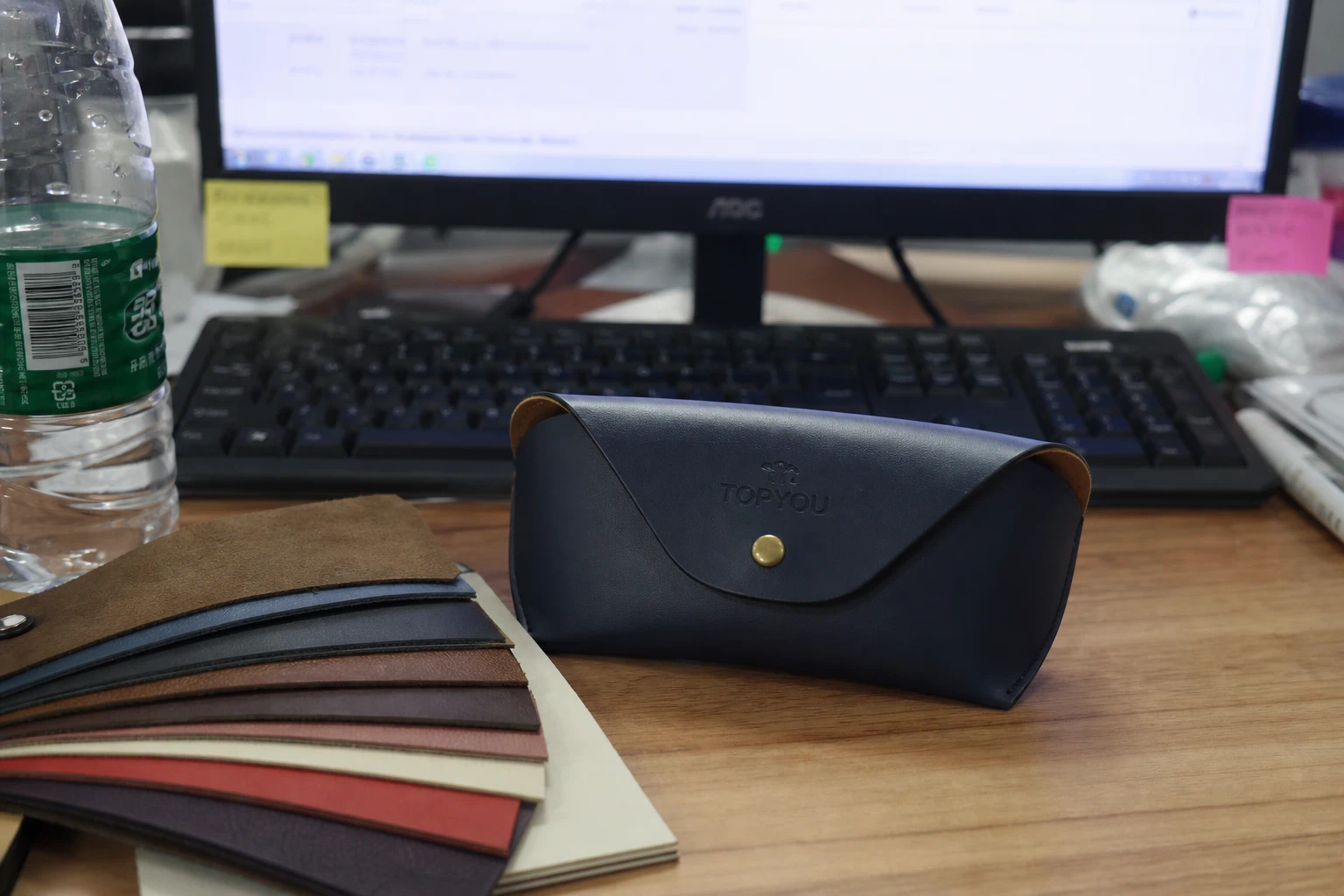
Provide reference images, frame dimensions, exterior material, lining, color direction and vector logo artwork. Confirm logo size and placement. If you need a paper box, pouch, cloth or insert, include it in the same brief.
A digital preview is useful for selecting a direction; it does not replace a physical sample for fit, feel and production approval. Explore the material and branding options before requesting a detailed quote.
Compare complete quotations
Ask whether the proposal includes samples, tooling, logo setup, accessories, packing, inspection and shipping. Record exclusions, quote validity and the production milestones. Low MOQ does not automatically mean low total project cost.
Agree the acceptable quality criteria before approval. A broad promise of “premium quality” is less useful than a specification covering dimensions, finish, branding, closure and packing. See the quality overview for the project discussion.
Use a sample scorecard to compare suppliers
Send the same product brief to each shortlisted supplier. Evaluate the response, sample and quotation against that brief. A supplier that asks precise questions about the frame envelope, materials and packing may be doing more useful development work than one offering an immediate price for an undefined case.
| Evaluation area | What to request | Evidence to retain |
|---|---|---|
| Fit and structure | Usable internal space and proposed model | Fit photographs with your identified frames |
| Materials | Exterior, backing, shell and lining specification | Material codes and approved swatches |
| Branding | Method, artwork constraints and setup scope | Artwork revision and logo sample |
| Production control | Approval and change-management process | Signed or otherwise recorded specification |
| Inspection | Defect definitions and inspection scope | Agreed criteria and report format |
| Commercial scope | Minimum per version and quote exclusions | Comparable itemized quotations |

Inspect with the actual eyewear, not just an empty case. Identify the biggest frame and any model with unusually thick folded temples. Record the fit of those models so the supplier understands the boundary of the product family.
Distinguish a development sample from an approval sample
A development sample explores whether an idea works. It may use a substitute material or an unfinished logo process. An approval sample should represent the final combination being ordered. If a substitute is unavoidable, list the differences and identify how the unresolved feature will be approved.
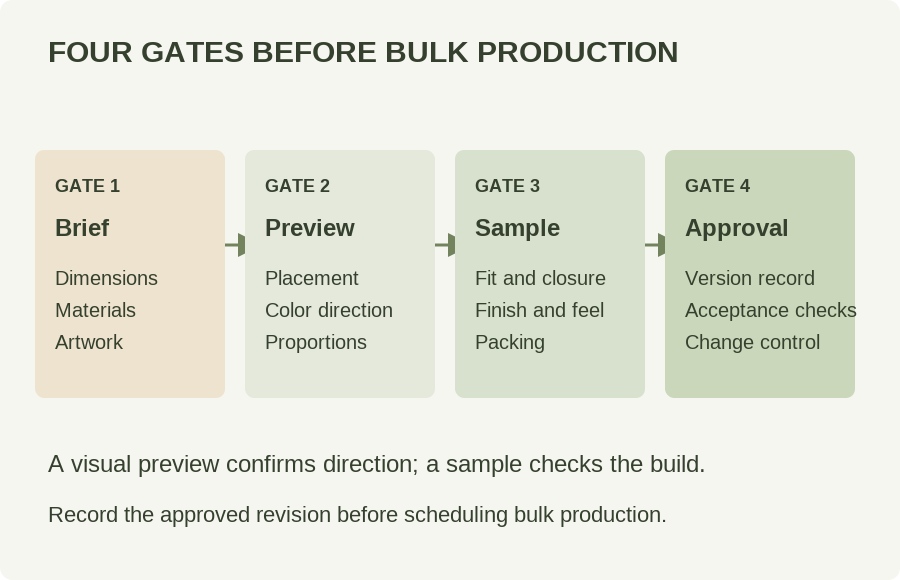
Keep the artwork revision, material references and sample status together. Do not approve mass production simply because an early sample looks attractive. Confirm that the closure, fit, lining, finish and packing correspond to the proposed order.
Define inspection before comparing “quality guarantees”
Translate broad quality language into observable criteria. Examples include the wrong case dimensions, a closure that does not function, missing components, an incorrect logo revision and visible assembly defects. Cosmetic boundaries should be illustrated with agreed samples or photographs.
If acceptance sampling is chosen, identify the applicable plan, inspection level, defect categories and acceptance criteria. ISO 2859-1:2026 defines AQL-indexed sampling schemes for lot-by-lot inspection. A statement such as “AQL inspection” is incomplete without the agreed plan; sampling is not proof that every individual unit is defect-free.
Ask whether the inspection covers only appearance or also fit, function, packing and documentation. Identify who performs it and how exceptions are resolved before shipment. A supplier’s general assurance should not replace a shared acceptance record.
Plan a repeatable first order
For a first small run, limit the number of changes that need simultaneous approval. An existing structure with one material, one color and one logo version gives a clearer basis for evaluating the result. Additional versions can be developed after the first combination has been approved.
Retain a reference sample from the approved order. Record the material and artwork revisions, packing arrangement and any accepted deviations. For a repeat order, ask which inputs need reconfirmation rather than assuming that every material remains available indefinitely.
The goal is a controlled route from a first sample to a repeatable order. The minimum quantity is one part of that decision; specification clarity, approval discipline and comparable quotations determine how useful the small-batch programme will be for your brand.
Prepare for the next order
Ask how a repeat order will use the approved sample, artwork and material specification. Check whether colors or materials may need reconfirmation when the next run is scheduled. Keep an organized approval record so both sides can identify changes.
For a starting quotation, send the selected style, quantity per version, logo artwork and destination through the contact page. The team can confirm whether the request fits a small-batch program or needs full-custom development.
YOUR NEXT STEP
Turn your packaging brief into a clear plan.
Share your preferred style, quantity, materials and destination. Our team can help confirm the options for your project.
Discuss your project