In this guide
The global eyewear market is a thriving industry valued at over 150billion,withsteadygrowthprojectedtoreach200 billion by 2028. Driven by factors like increasing vision issues, rising fashion consciousness, and the growing popularity of blue light glasses, this sector offers immense opportunities for entrepreneurs—especially beginners with a passion for style, functionality, or wellness. However, starting an eyewear business isn’t just about selling glasses; it requires careful planning, market insight, strategic sourcing, and compliance with industry regulations. Whether you’re dreaming of launching an online store, a brick-and-mortar boutique, or a niche brand focusing on sustainable or prescription eyewear, this comprehensive guide will walk you through every step of the journey. We’ll also highlight how partnering with reliable suppliers like TOPYOU Packaging can elevate your brand and streamline operations.
Introduction: Why the Eyewear Business Is a Smart Choice for Beginners
For beginners looking to enter the entrepreneurial world, the eyewear industry stands out for several compelling reasons. First, it’s a “needs-based” market—millions of people require prescription glasses for vision correction, while others seek sunglasses for UV protection or blue light glasses for digital eye strain. This constant demand ensures a stable customer base, even during economic fluctuations. Second, the industry offers significant profit margins: wholesale costs for eyewear can be as low as 10–30, while retail prices often range from 50to300+ (and even higher for luxury brands). Third, there’s ample room for niche differentiation—you can specialize in sustainable eyewear, vintage styles, affordable prescription glasses, sports sunglasses, or tech-integrated frames, allowing you to target specific audiences and stand out from competitors. Finally, the rise of e-commerce has lowered entry barriers, making it easier for beginners to launch online stores without the high overhead of physical retail spaces.

Chapter 1: Conduct In-Depth Market Research to Identify Your Niche
Before investing time and money, thorough market research is critical to understanding the industry landscape, identifying gaps, and defining your unique value proposition. For beginners, this step will help you avoid common pitfalls and ensure your business aligns with market demand.
1. 1 Analyze the Current Eyewear Market Trends
Start by researching the latest trends shaping the eyewear industry. As of 2025, several key trends are driving consumer behavior:
- Sustainable & Eco-Friendly Eyewear: Consumers are increasingly prioritizing brands that use recycled materials (e.g., ocean plastic, recycled aluminum), biodegradable frames, or carbon-neutral production processes. Brands like Warby Parker and Allbirds have popularized this niche, but there’s still room for new entrants—especially those focusing on affordability or unique sustainable materials.
- Blue Light Glasses & Digital Wellness: With 80% of adults spending 7+ hours daily on digital devices, blue light glasses have become a must-have accessory. This niche includes both non-prescription “screen glasses” and prescription lenses with blue light filtering, targeting remote workers, students, and gamers.
- Affordable Prescription Eyewear: Traditional optical stores often charge exorbitant prices for prescription glasses, creating a gap for brands offering high-quality, budget-friendly options (e.g., 50–100 per pair). Online retailers like Zenni Optical have succeeded in this space by cutting out middlemen.
- Athleisure & Sports Eyewear: The growing fitness trend has boosted demand for sports-specific eyewear—waterproof sunglasses, impact-resistant frames, and prescription sports glasses for activities like running, cycling, and golf.
- Vintage & Retro Styles: Nostalgic designs (e.g., 90s oval frames, 70s aviators) are making a comeback, appealing to younger consumers seeking unique, trend-forward accessories.
To gather trend data, use tools like Google Trends (to see search volume for keywords like “sustainable eyewear” or “blue light glasses”), Statista (for market reports), and social media platforms (Instagram, TikTok, Pinterest) to observe what styles and brands are going viral. You can also analyze competitors’ websites and customer reviews to identify unmet needs (e.g., “affordable sustainable glasses” or “blue light glasses for kids”).
1. 2 Define Your Target Audience
Once you’ve identified potential niches, narrow down your target audience. A clear audience profile will guide every aspect of your business, from product design to marketing. Ask yourself:
- Demographics: Are you targeting teens, millennials, Gen X, or seniors? What is their income level (budget, mid-range, luxury)? Where do they live (urban, suburban, rural)?
- Psychographics: What are their values (sustainability, fashion, functionality)? What are their pain points (expensive glasses, ill-fitting frames, lack of style options)? How do they shop (online, in-store, hybrid)?
- Use Cases: Do they need glasses for work (blue light filtering), sports (impact resistance), fashion (trendy frames), or medical reasons (high-prescription lenses)?
For example, if you choose the sustainable eyewear niche, your target audience might be eco-conscious millennials and Gen Z with a mid-range budget, who shop online and prioritize transparency in supply chains. If you focus on affordable prescription glasses for seniors, your audience might be price-sensitive consumers aged 55+, who prefer in-store fittings but also value online convenience.
Create a detailed buyer persona to keep your business focused. For instance: “Emma, 28, a remote marketing manager who spends 10+ hours on her laptop daily. She’s eco-conscious, shops online, and is willing to pay
80–120 for blue light glasses made from recycled materials. She hates overpriced optical stores and wants stylish frames that reflect her personality.”
1. 3 Research Competitors Thoroughly
Competitor analysis is essential to identify your unique selling point (USP). Start by listing both direct competitors (brands in your niche) and indirect competitors (general eyewear retailers). For each competitor, analyze:
- Products: What types of eyewear do they sell? What materials, styles, and price points do they offer? Do they specialize in prescription, non-prescription, or both?
- Pricing Strategy: Are they budget-friendly, mid-range, or luxury? Do they offer discounts, subscriptions, or bundle deals?
- Marketing & Branding: How do they position themselves (e.g., “sustainable,” “fashion-forward,” “affordable”)? What social media platforms do they use? What type of content do they create (product demos, sustainability stories, style guides)?
- Customer Experience: Do they offer free shipping, easy returns, or virtual try-ons? What do customer reviews say about their product quality, customer service, and delivery times?
- Weaknesses: Where are they falling short? Common gaps include poor customer service, limited size options, lack of sustainable materials, or slow shipping.
For example, if you find that most sustainable eyewear brands are priced above 150,yourUSPcouldbe“affordablesustainableeyewearunder100.” If competitors don’t offer virtual try-ons for online shoppers, you could differentiate by adding that feature to your website.
Use tools like SEMrush (to analyze competitors’ SEO strategies), SimilarWeb (to check their website traffic), and Amazon Reviews (to read customer feedback) to gather insights. This research will help you refine your niche and create a business that solves real customer problems.
Chapter 2: Develop a Solid Business Plan
A well-crafted business plan is your roadmap to success. It will help you clarify your goals, secure funding (if needed), and stay on track as you launch and grow your business. For beginners, a simple yet comprehensive plan should include the following sections:
2. 1 Define Your Business Model
Choose a business model that aligns with your niche, target audience, and resources. The most common models for eyewear businesses are:
- E-Commerce Store (DTC): Direct-to-consumer (DTC) online stores are ideal for beginners due to low overhead. You can sell through your own website (built on Shopify, WooCommerce, or BigCommerce) or third-party platforms like Amazon, Etsy, or eBay. DTC allows you to control branding, collect customer data, and offer personalized experiences (e.g., virtual try-ons, custom packaging). However, you’ll need to invest in digital marketing to drive traffic.
- Brick-and-Mortar Boutique: A physical store offers in-person fittings, which is crucial for prescription eyewear or luxury brands. It also allows you to build local relationships and create a tactile shopping experience. However, costs are higher (rent, utilities, staff salaries), and you’ll need to choose a high-foot-traffic location (e.g., shopping malls, downtown areas).
- Hybrid Model: Combine online and offline sales (e.g., an online store with a small showroom for fittings, or a physical store with an e-commerce website for online orders). This model caters to both digital shoppers and those who prefer in-person interactions.
- Dropshipping: For beginners with limited capital, dropshipping allows you to sell eyewear without holding inventory. When a customer places an order, your supplier ships the product directly to them. This reduces upfront costs but gives you less control over product quality and shipping times.
For example, if you’re targeting eco-conscious millennials who shop online, a DTC e-commerce model is likely best. If you’re focusing on prescription glasses for seniors in a small town, a brick-and-mortar boutique with a simple online presence (for appointments and product browsing) might be more effective.
2. 2 Set Clear Business Goals
Define short-term and long-term goals to measure your success. Goals should be specific, measurable, achievable, relevant, and time-bound (SMART). Examples include:
- Short-Term (6–12 months): Launch your e-commerce website, source 50+ eyewear styles, reach 1,000 monthly website visitors, make 50+ sales per month, and build a social media following of 2,000+ followers.
- Long-Term (2–5 years): Expand your product line to include accessories (e.g., custom eyeglass cases, lens wipes), open a physical showroom, partner with 10+ optometrists for prescription referrals, and achieve $500,000+ in annual revenue.
Setting goals will help you stay motivated and make strategic decisions. For example, if your short-term goal is to reach 1,000 monthly visitors, you’ll need to invest in SEO, social media marketing, and content creation.
2. 3 Create a Financial Plan
A financial plan is critical to avoid running out of money. Start by calculating your startup costs and ongoing expenses, then project your revenue and profit margins.
2.3.1 Startup Costs
Startup costs vary depending on your business model. Here’s a breakdown for common models:
- E-Commerce DTC Store: 5,000–20,000 (website development, domain hosting, initial inventory, marketing, legal fees, packaging supplies like custom eyeglass cases from TOPYOU Packaging).
- Brick-and-Mortar Boutique: 50,000–200,000 (rent deposit, renovations, inventory, staff salaries, equipment like lensometers, marketing, legal fees).
- Dropshipping: 1,000–5,000 (website development, marketing, legal fees—no inventory costs upfront).
Key startup expenses include:
- Website Costs: Domain name (15/year),hosting(10–50/month),e−commerceplatformfees(Shopify:39–399/month),websitedesign(500–$5,000).
- Inventory: For DTC and brick-and-mortar stores, you’ll need to purchase initial inventory. Start with 30–50 styles (mix of bestsellers and niche designs) to test demand. Wholesale costs range from 10–30 per pair for budget frames, 30–80 for mid-range, and $80+ for luxury.
- Legal Fees: Business registration (50–500), trademarks (225–400), and compliance costs (e.g., FDA registration for prescription eyewear: 2,000–5,000).
- Marketing: Initial social media ads (500–2,000), content creation (300–1,000), and influencer collaborations (500–3,000).
- Packaging: Custom eyeglass cases, lens wipes, and shipping boxes. Partnering with TOPYOU Packaging can help you secure high-quality, branded packaging at wholesale prices—critical for creating a premium unboxing experience.
2.3.2 Ongoing Expenses
Monthly expenses include:
- Inventory Restocking: 20–30% of monthly revenue (varies based on sales volume).
- Marketing: 15–25% of monthly revenue (social media ads, SEO, content creation).
- Website Maintenance: Hosting, platform fees, and updates (50–200/month).
- Shipping & Fulfillment: 5–15 per order (depending on location and shipping method).
- Customer Service: 10–20/hour for part-time staff (or use chatbots for cost savings).
- Utilities (Brick-and-Mortar): 1,000–3,000/month (rent, electricity, water).
2.3.3 Revenue Projections
Project your revenue based on your price points, sales volume, and profit margins. For example:
- If you sell 50 pairs of glasses per month at an average retail price of 100,yourmonthlyrevenueis5,000.
- If your wholesale cost per pair is 30,yourcostofgoodssold(COGS)is1,500/month.
- Subtract ongoing expenses (e.g., 2,000/monthformarketing,500 for shipping, 300forwebsitefees),yourmonthlyprofitis700.
As you grow, you can increase sales volume by expanding your product line, improving marketing, and building customer loyalty. Most eyewear businesses break even within 6–12 months with consistent effort.
2. 4 Outline Your Marketing Strategy
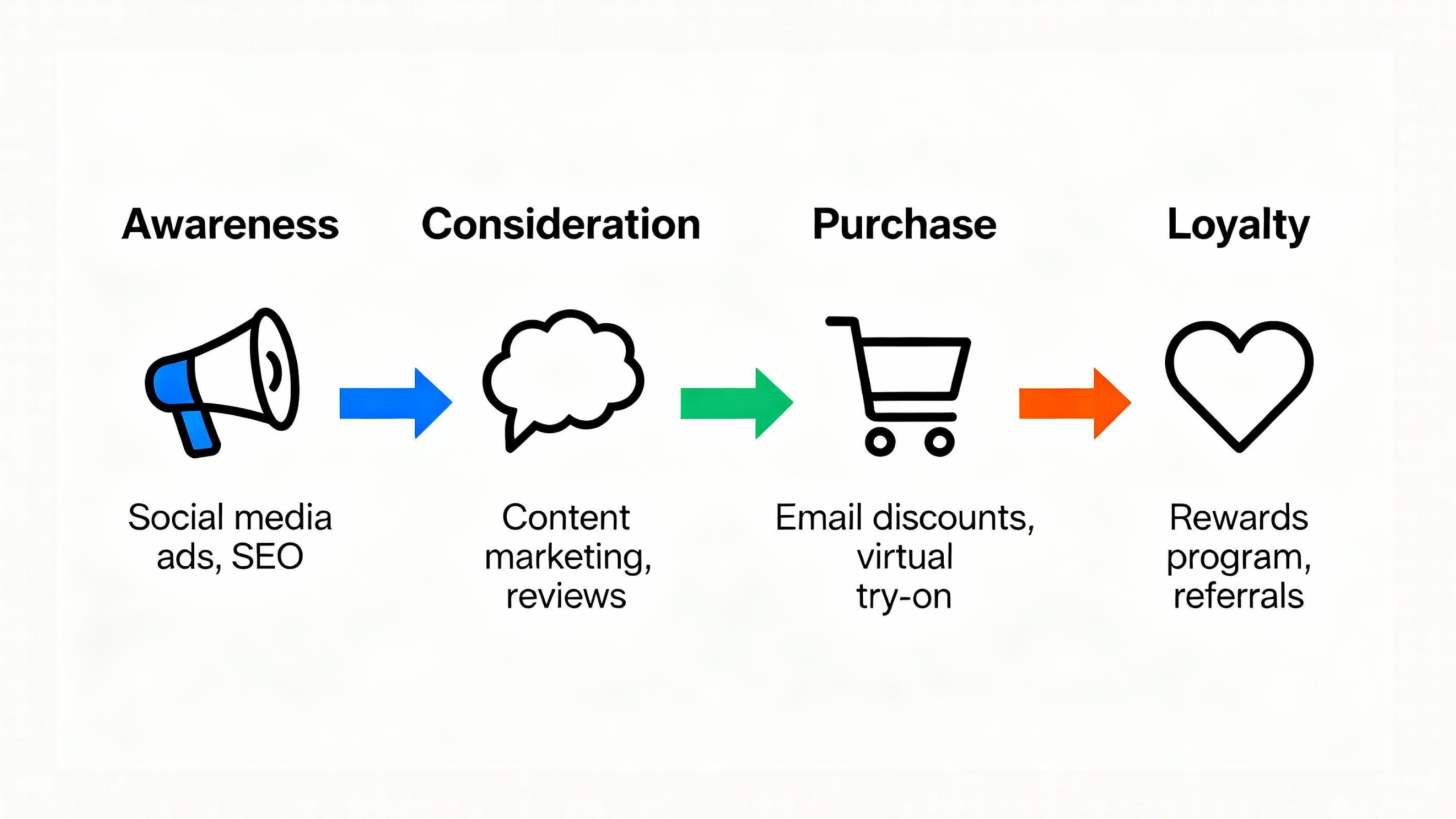
Your marketing strategy will determine how you attract and retain customers. For beginners, focus on cost-effective channels that align with your target audience. Key strategies include:
- Digital Marketing:
- SEO: Optimize your website for keywords like “affordable sustainable eyewear,” “blue light glasses for remote workers,” or “prescription glasses online.” Create blog content (e.g., “How to Choose the Right Blue Light Glasses” or “10 Sustainable Eyewear Brands to Love”) to drive organic traffic.
- Social Media: Use Instagram and TikTok to showcase your products (style reels, unboxing videos, sustainability stories). Partner with micro-influencers (10k–50k followers) in your niche to reach new audiences.
- Email Marketing: Collect email addresses through your website (offer a 10% discount for sign-ups) and send newsletters with new product launches, style tips, and exclusive deals.
- Content Marketing: Create valuable content to establish authority—blog posts, YouTube tutorials (e.g., “How to Measure Your Pupillary Distance at Home”), and Pinterest boards (e.g., “Trendy Eyewear Styles for 2025”).
- Local Marketing (Brick-and-Mortar): Partner with local optometrists for referrals, host in-store events (e.g., “Eyewear Styling Workshops”), and list your business on Google My Business and Yelp.
- Customer Loyalty: Offer a rewards program (e.g., “Earn points for every purchase to redeem free lens upgrades”) or refer-a-friend discounts (e.g., “Give 20,get20”) to encourage repeat business.
Your marketing strategy should evolve as you learn what works. For example, if TikTok reels drive more traffic than Instagram posts, focus on creating more short-form video content. If SEO takes time to yield results, supplement with paid ads to boost initial sales.
Chapter 3: Handle Legal and Regulatory Compliance
The eyewear industry is highly regulated, especially for prescription glasses and sunglasses. Failing to comply with laws can result in fines, legal action, or even business closure. Here’s what beginners need to know:
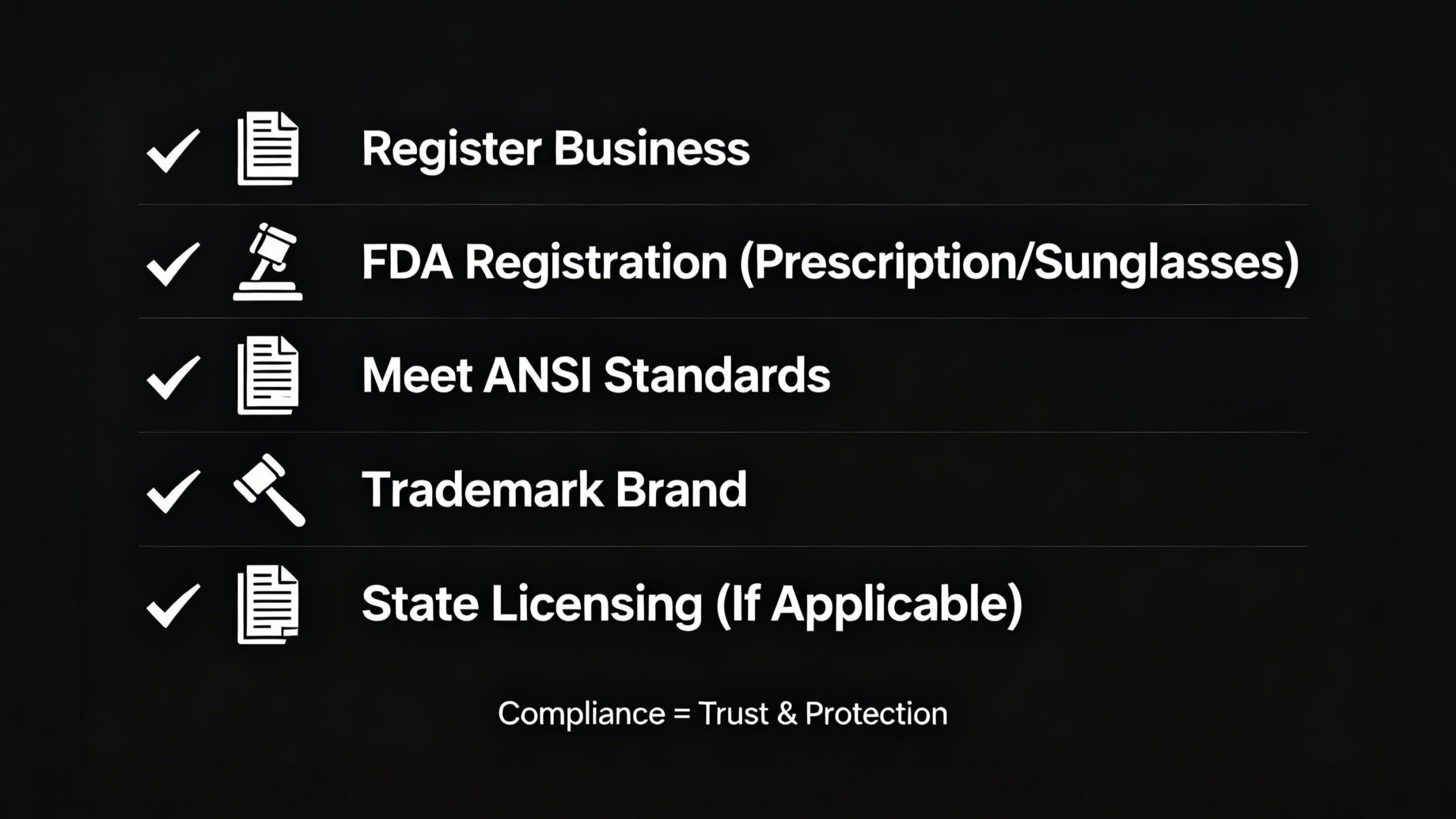
3. 1 Register Your Business
Choose a business structure and register your company with the appropriate authorities. Common structures include:
- Sole Proprietorship: Easy to set up, but you’re personally liable for business debts. Ideal for beginners with low risk.
- Limited Liability Company (LLC): Separates personal and business assets, offering liability protection. More expensive to set up but recommended for most businesses.
- Corporation: Best for businesses planning to scale or seek investors. More complex and costly, but offers tax benefits and liability protection.
Register your business name with your state or local government (fees range from
50–500) and obtain an Employer Identification Number (EIN) from the IRS (free) for tax purposes. If you’re selling online, you may also need to register for sales tax in states where you have nexus (e.g., physical presence, significant sales volume).
3. 2 Compliance for Prescription Eyewear
If you plan to sell prescription glasses, you must comply with strict regulations from the Food and Drug Administration (FDA) in the U.S. (and similar agencies in other countries):
- FDA Registration: All manufacturers and distributors of prescription eyewear must register with the FDA. The registration process costs 2,000–5,000 and requires submitting documentation about your products and quality control processes.
- Quality Standards: Prescription lenses must meet ANSI Z80.1 standards (for impact resistance, optical clarity, and thickness). You’ll need to work with suppliers that provide FDA-approved lenses and frames.
- Prescription Verification: You must verify customers’ prescriptions before fulfilling orders. For online stores, this means requiring customers to upload a valid prescription from an optometrist or ophthalmologist.
- Labeling Requirements: Prescription glasses must be labeled with the brand name, lens power, frame size, and country of origin.
In addition to FDA regulations, some states require optical businesses to be licensed. Check your state’s requirements—for example, California requires online optical retailers to have a licensed optician on staff.
3. 3 Compliance for Sunglasses
Sunglasses are classified as medical devices by the FDA because they protect against UV radiation. Key compliance requirements include:
- UV Protection Claims: Sunglasses must block 99–100% of UVA and UVB rays to be labeled “UV400” or “100% UV Protection.” False claims can result in fines of up to $10,000 per violation.
- Impact Resistance: Sunglasses must meet ANSI Z80.3 standards (similar to prescription glasses) to ensure they don’t shatter upon impact.
- Labeling: Labels must include UV protection level, lens category (1–4, indicating light reduction), and frame size.
If you’re selling polarized sunglasses, ensure your suppliers provide documentation proving polarization effectiveness. Avoid misleading marketing terms like “polarized for maximum UV protection”—polarization reduces glare but doesn’t add UV protection.
3. 4 Trademarks and Intellectual Property
Protect your brand by trademarking your business name, logo, and any unique product designs. Trademarking prevents competitors from using similar branding, which can confuse customers. The process involves:
- Trademark Search: Use the USPTO Trademark Electronic Search System (TESS) to ensure your brand name/logo isn’t already registered.
- Filing a Trademark Application: Submit an application to the USPTO (cost: 225–400 per class). The process takes 6–12 months, but you can use the “TM” symbol while waiting for approval.
You should also ensure your product designs don’t infringe on existing patents. For example, if a competitor has a patent for a foldable sunglasses design, you can’t sell identical products without permission.
Chapter 4: Source High-Quality Eyewear and Supplies
The quality of your products will make or break your business. For beginners, finding reliable suppliers is critical to ensuring customer satisfaction and building a positive brand reputation. Here’s how to source eyewear, lenses, and essential supplies like custom eyeglass cases:
4. 1 Find Reputable Eyewear Suppliers
There are several types of suppliers to consider, depending on your business model and niche:
- Wholesale Suppliers: These companies sell bulk eyewear (frames and lenses) at discounted prices. Ideal for DTC and brick-and-mortar stores that want to hold inventory. Popular wholesale platforms include Alibaba, DHgate, and TradeKey. When vetting suppliers:
- Request samples to test quality (check frame durability, lens clarity, and finish).
- Ask for certifications (FDA approval, ANSI standards, ISO 9001) to ensure compliance.
- Inquire about minimum order quantities (MOQs)—most wholesale suppliers require MOQs of 50–100 pairs, but some offer lower MOQs for beginners.
- Negotiate pricing—bulk orders often qualify for discounts.
- Manufacturers: Working directly with manufacturers allows for customization (e.g., unique frame designs, branded lenses). This is ideal if you want to launch a private-label brand. Manufacturers can be found on Alibaba or through trade shows (e.g., SILMO Paris, Vision Expo). Be prepared to meet higher MOQs (100–500 pairs) and longer lead times (4–8 weeks).
- Dropshipping Suppliers: For beginners with limited capital, dropshipping suppliers handle inventory and shipping. You simply list their products on your website, and they fulfill orders directly to customers. Popular dropshipping platforms for eyewear include Oberlo, Spocket, and SaleHoo. However, ensure the supplier offers quality products—read reviews and request samples before partnering.
Key factors to consider when choosing a supplier:
- Quality: Do their products meet industry standards? Are frames durable, and lenses scratch-resistant?
- Customization: Can they add your brand logo to frames or lenses? Do they offer custom colors or designs?
- Lead Times: How long does it take to fulfill orders? For wholesale, lead times are typically 2–4 weeks; for custom manufacturing, 4–8 weeks.
- Pricing: Are their prices competitive? Do they offer volume discounts?
- Customer Service: Do they respond to inquiries promptly? Will they help resolve issues with defective products?
For example, if you’re launching a sustainable eyewear brand, look for suppliers that use recycled materials and provide transparency in their production processes. If you’re selling prescription glasses, partner with suppliers that offer a wide range of lens options (single-vision, progressive, blue light filtering) and fast lens cutting services.
4. 2 Source Lenses for Prescription Eyewear
If you’re selling prescription glasses, you’ll need to source high-quality lenses that meet optical standards. Lenses are available in several materials and coatings, each with different benefits:
- Lens Materials:
- CR-39: Lightweight, affordable, and scratch-resistant. Ideal for low to moderate prescriptions.
- Polycarbonate: Impact-resistant, lightweight, and shatterproof. Perfect for kids, sports, and high-prescription lenses.
- Trivex: Similar to polycarbonate but with better optical clarity. More expensive but ideal for high prescriptions.
- High-Index Plastic: Thin and lightweight for strong prescriptions (e.g., -6.00 or +4.00). Reduces lens thickness and weight.
- Lens Coatings:
- Anti-Reflective (AR) Coating: Reduces glare and improves clarity. Popular for office workers and drivers.
- Scratch-Resistant Coating: Protects lenses from scratches. Essential for durable products.
- UV Coating: Blocks UVA and UVB rays. Required for all prescription glasses (even if not marketed as sunglasses).
- Blue Light Coating: Filters blue light from digital devices. A must-have for blue light glasses.
Source lenses from FDA-approved suppliers that meet ANSI Z80.1 standards. For online stores, you can partner with a lab that cuts lenses to customers’ prescriptions and ships them directly to you (or dropships to customers). For brick-and-mortar stores, you may need to invest in lens-cutting equipment (cost: 5,000–20,000) or outsource lens cutting to a local lab.
4. 3 Essential Supplies: Custom Eyeglass Cases and Accessories
Don’t overlook the importance of accessories—they enhance the customer experience and add value to your products. Key supplies include:
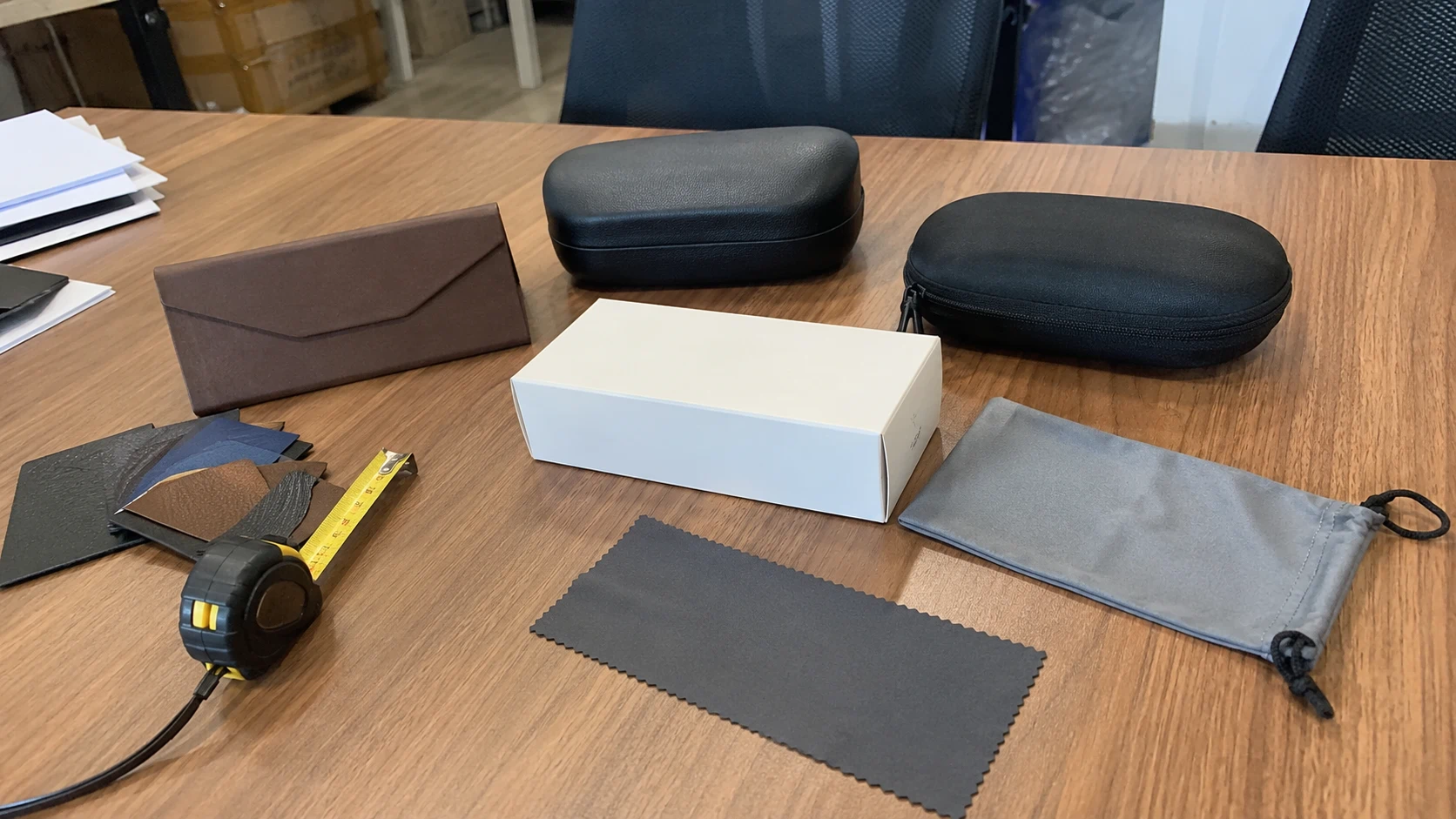
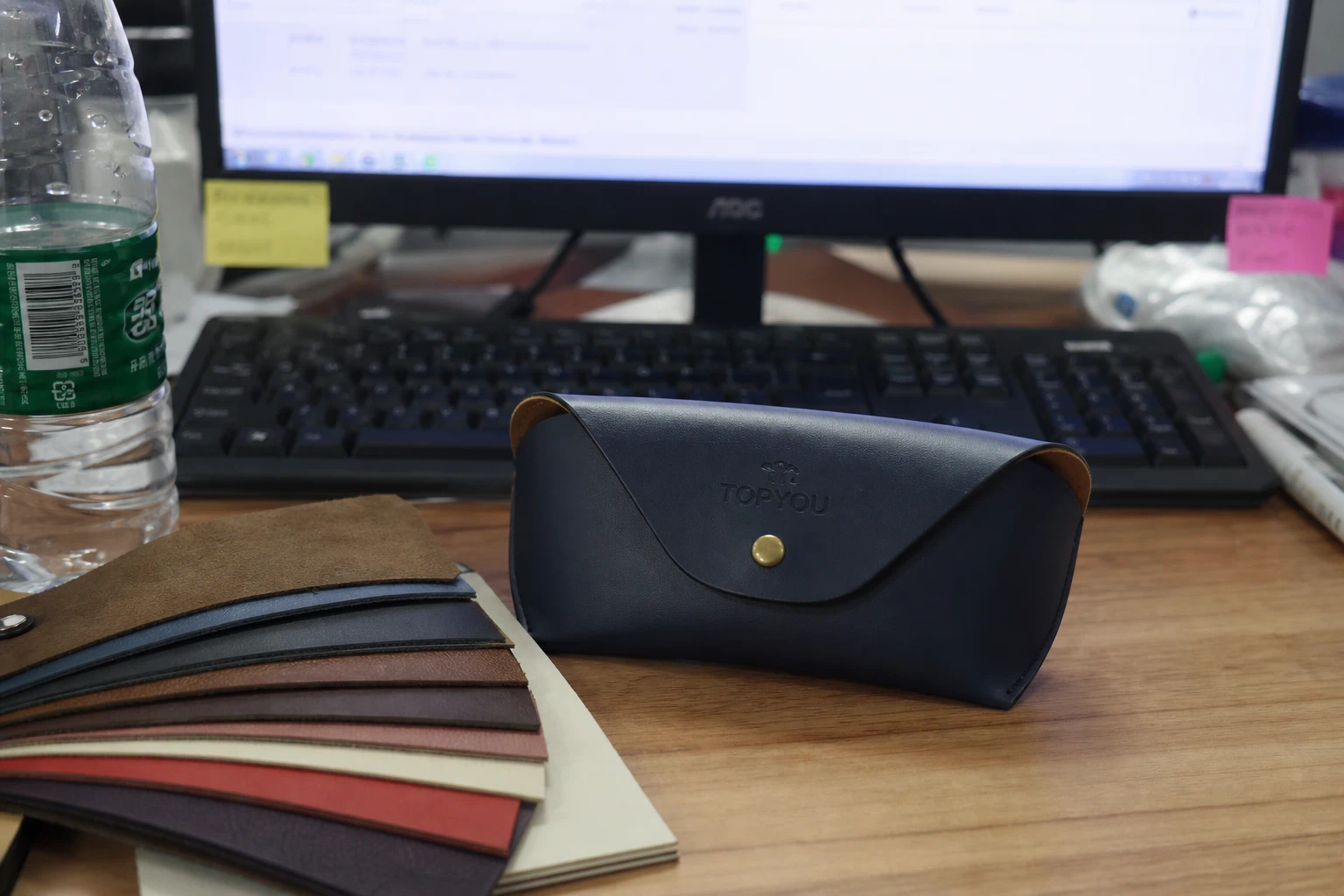
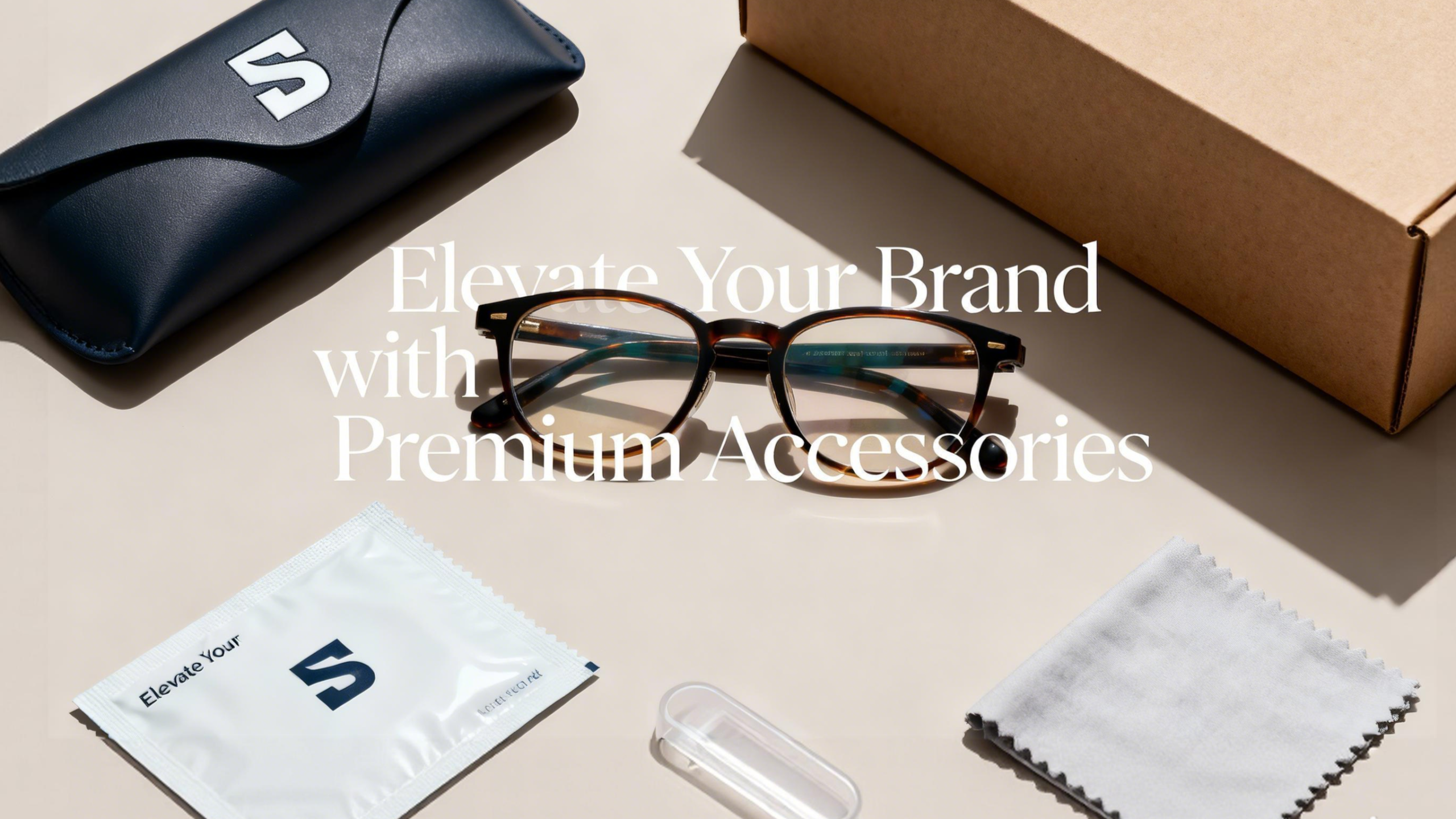
- Custom Eyeglass Cases: A high-quality eyeglass case protects your products and serves as a branding tool. Partner with a reliable packaging supplier like TOPYOU Packaging to create custom cases that reflect your brand—choose from materials like EVA foam (shock-absorbent), leather (luxury), or recycled plastic (sustainable). Add your logo, brand colors, or a unique design to make the case memorable. TOPYOU Packaging offers flexible MOQs (3000 units for custom cases) and 45–60 day lead times, making it ideal for beginners scaling their business.
- Lens Wipes: Pre-moistened lens wipes are a practical accessory that customers use regularly. Brand them with your logo to keep your brand top of mind.
- Cleaning Kits: Include a microfiber cloth, lens cleaner spray, and case in a branded kit—perfect as a free gift with purchase or upsell item.
- Shipping Boxes: Use sturdy, branded shipping boxes to protect eyewear during transit. TOPYOU Packaging also offers custom shipping boxes that align with your eyeglass cases, creating a cohesive unboxing experience.
Accessories not only improve customer satisfaction but also increase perceived value—customers are more likely to pay a premium for a product that comes with high-quality, branded accessories.
4. 4 Vet Suppliers Thoroughly
Before committing to a supplier, conduct thorough due diligence to avoid scams or low-quality products:
- Request Samples: Always test products before placing a bulk order. For eyewear, check frame fit, lens clarity, and durability (e.g., bend frames slightly to see if they retain shape). For packaging, test the strength of custom eyeglass cases (e.g., drop them from a height to check for damage).
- Check References: Ask suppliers for references from other eyewear businesses. Contact these references to ask about product quality, lead times, and customer service.
- Verify Certifications: Ensure suppliers have the necessary certifications (FDA, ANSI, ISO) to prove compliance. Avoid suppliers that can’t provide documentation.
- Start Small: Place a small trial order (e.g., 50 pairs of glasses, 100 custom cases) to test the supplier’s reliability. If the order arrives on time and meets quality standards, you can scale up.
Building strong relationships with suppliers is key to long-term success. Communicate your needs clearly, pay on time, and provide feedback—this will help you negotiate better terms and ensure consistent quality.
Chapter 5: Build Your Brand and Online Presence
Your brand is more than just a logo—it’s the personality of your business and how customers perceive you. For beginners, building a strong brand and online presence is critical to standing out in a crowded market.
5. 1 Develop Your Brand Identity
Your brand identity includes visual elements (logo, colors, typography) and core values (mission, vision, USP). Here’s how to develop it:
- Define Your Brand Values: What does your business stand for? For example, a sustainable eyewear brand might value “transparency,” “eco-friendliness,” and “affordability.” A luxury brand might value “quality,” “craftsmanship,” and “exclusivity.” Your values should guide every decision, from product sourcing to marketing.
- Create a Mission Statement: Summarize your brand’s purpose in one sentence. For example: “To make high-quality, sustainable eyewear accessible to everyone, without compromising on style or the planet.”
- Design Visual Branding:
- Logo: Create a memorable logo that reflects your niche. For sustainable brands, use natural colors (greens, browns) and organic shapes. For fashion-forward brands, use bold colors and modern typography. Hire a freelance designer on Fiverr or Upwork (cost: 100–500) if you don’t have design skills.
- Color Palette: Choose 2–3 primary colors and 2–3 secondary colors that align with your brand. For example, a blue light glasses brand might use blue and white (calming, tech-focused), while a vintage brand might use burgundy and cream (nostalgic).
- Typography: Select fonts that are easy to read and reflect your brand’s personality. Use a sans-serif font (e.g., Helvetica) for modern brands and a serif font (e.g., Times New Roman) for classic brands.
- Brand Voice: Define how you communicate with customers. For example, a youth-focused brand might use casual, playful language, while a professional brand might use formal, informative language. Consistency is key—use the same voice across your website, social media, and customer service.
Your brand identity should be consistent across all touchpoints—website, social media, packaging, and marketing materials. This builds recognition and trust with customers.
5. 2 Build Your E-Commerce Website
For DTC and hybrid models, your website is your storefront. It should be user-friendly, visually appealing, and optimized for conversions. Follow these steps to build a successful eyewear website:
- Choose a Platform: Use an e-commerce platform that’s easy to use and scalable. Top options include:
- Shopify: Ideal for beginners—drag-and-drop design, built-in payment processing, and 24/7 support. Plans start at $39/month.
- WooCommerce: A WordPress plugin that’s free to use (but requires hosting). More customizable than Shopify but requires technical skills.
- BigCommerce: Great for scaling businesses—offers advanced features like multi-channel selling and SEO tools. Plans start at $39.95/month.
- Design Your Website:
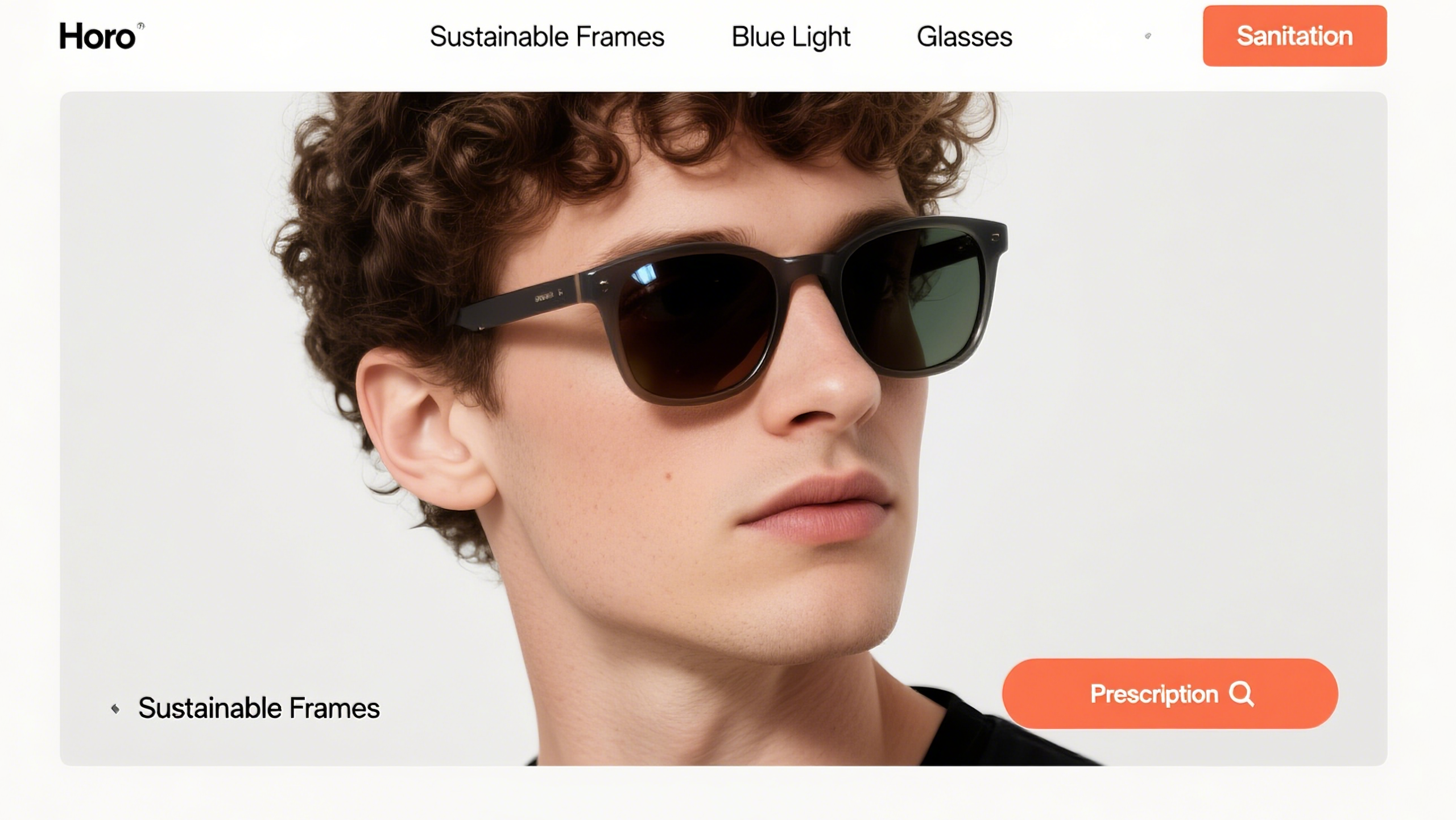
- Homepage: Make a strong first impression with a hero image (feature your best-selling product), clear USP, and call-to-action (CTA) buttons (e.g., “Shop Now,” “Browse Collection”). Include sections for your brand story, product categories, and customer reviews.
- Product Pages: Each product page should include high-quality photos (front, side, close-up of details), detailed descriptions (materials, dimensions, features), pricing, and a clear “Add to Cart” button. For prescription glasses, include a form for customers to upload their prescription.
- Virtual Try-On Feature: This is a game-changer for online eyewear stores. Tools like Virtual Try-On (VTO) by Snapchat or third-party plugins (e.g., Eyewear Try-On) allow customers to upload a photo or use their webcam to see how glasses look on their face. This reduces return rates and increases conversions.
- Checkout Process: Keep checkout simple—limit steps to 3–4 (cart → shipping → payment → confirmation). Offer multiple payment options (credit card, PayPal, Apple Pay) and free shipping (or free shipping over a certain amount) to reduce cart abandonment.
- Returns Policy: Clearly state your returns policy (e.g., “30-day free returns for unused products”) to build trust. Eyewear has a high return rate (15–20%), so a flexible policy is essential.
- Optimize for SEO:
- Use relevant keywords in page titles, meta descriptions, product descriptions, and blog content.
- Optimize images (compress files, add alt text with keywords like “sustainable blue light glasses”).
- Create a sitemap and submit it to Google Search Console.
- Build backlinks by guest posting on eyewear blogs or partnering with influencers.
5. 3 Leverage Social Media to Build Awareness
Social media is a powerful tool for eyewear brands, as it allows you to showcase your products visually and engage with customers. Focus on platforms where your target audience spends the most time:
- Instagram: Ideal for fashion and lifestyle brands. Post high-quality photos and reels of your products (e.g., models wearing glasses in different settings, close-ups of frame details, unboxing videos). Use hashtags like #SustainableEyewear, #BlueLightGlasses, #EyewearTrends2025 to reach new audiences. Host Instagram Live sessions to answer customer questions or showcase new products.
- TikTok: Perfect for reaching younger audiences (Gen Z and millennials). Create short, engaging videos—trend challenges (e.g., “How I Style My Glasses for Work vs. Weekend”), product demos (e.g., “Testing the Scratch Resistance of Our Lenses”), or behind-the-scenes content (e.g., “How Our Sustainable Frames Are Made”). Use trending sounds and hashtags to increase visibility.
- Pinterest: Great for driving traffic to your website. Create boards like “Trendy Eyewear Styles,” “Sustainable Living,” or “Blue Light Protection Tips” and pin your product pages and blog content. Use keywords in pin titles and descriptions to rank in search results.
- Facebook: Useful for building a community and targeting older audiences. Create a Facebook page for your brand, post updates about new products and promotions, and join eyewear-related groups to share your business (avoid spamming).
Consistency is key—post 3–5 times per week on each platform and engage with your audience (reply to comments, like posts, and follow relevant accounts). Use social media analytics to track which content performs best (e.g., reels vs. photos) and adjust your strategy accordingly.
5. 4 Create Valuable Content to Drive Traffic
Content marketing is a cost-effective way to attract organic traffic, establish authority, and build trust with customers. Create content that addresses your audience’s pain points and interests:
- Blog Posts: Write in-depth articles about topics like “How to Choose the Right Eyewear for Your Face Shape,” “10 Signs You Need Blue Light Glasses,” “The Ultimate Guide to Sustainable Eyewear Materials,” or “How to Clean Your Glasses Properly.” Optimize each post for SEO by using relevant keywords, adding internal links to product pages, and including high-quality images.
- YouTube Videos: Create video tutorials (e.g., “How to Measure Your Pupillary Distance at Home,” “How to Style Oversized Glasses”), product reviews, or brand stories (e.g., “Our Journey to Creating Sustainable Eyewear”). YouTube is the second-largest search engine, so optimizing videos with keywords in titles, descriptions, and tags can drive significant traffic.
- Email Newsletters: Send monthly or bi-weekly newsletters with valuable content—style tips, new product launches, exclusive discounts, and customer spotlights. Use email marketing tools like Mailchimp or Klaviyo to segment your audience (e.g., new subscribers vs. repeat customers) and personalize content.
Content marketing takes time to yield results, but it’s a long-term investment that pays off in the form of loyal customers and organic traffic. Focus on creating high-quality, actionable content that provides real value to your audience.
Chapter 6: Launch and Grow Your Eyewear Business
Once you’ve completed the planning and setup phases, it’s time to launch your business. Here’s how to ensure a successful launch and scale your business over time:
6. 1 Prepare for Launch
Before launching, make sure you’ve checked all the boxes:
- Test Your Website: Ensure your website is mobile-friendly, loads quickly (use Google PageSpeed Insights to test), and has no broken links. Test the checkout process to ensure payments work smoothly.
- Stock Inventory: If you’re not dropshipping, stock enough inventory to meet initial demand. Start with bestsellers and niche products to minimize risk.
- Train Staff: If you have employees (e.g., customer service, in-store staff), train them on your products, brand values, and customer service policies.
- Launch Marketing Campaign: Tease your launch on social media (e.g., “Coming Soon: Sustainable Eyewear for Under $100”) and send a pre-launch email to subscribers with a discount code for early buyers. Partner with influencers to promote your launch—offer them free products in exchange for posts or reviews.
- Set Up Analytics: Install Google Analytics and e-commerce tracking to monitor website traffic, sales, and customer behavior. This will help you make data-driven decisions.
6. 2 Launch Your Business
On launch day, generate excitement with these strategies:
- Offer a Launch Discount: Provide a limited-time discount (e.g., 20% off first orders) to encourage early sales.
- Host a Virtual Event: Use Instagram Live or Zoom to launch your brand—showcase products, answer questions, and offer exclusive deals to attendees.
- Reach Out to Media: Pitch your brand to local newspapers, lifestyle blogs, and eyewear publications. For example, a sustainable eyewear brand could pitch a story about “How This Local Entrepreneur Is Making Eco-Friendly Eyewear Accessible.”
- Engage with Customers: Respond to comments and messages promptly, and thank early customers for their support. Ask for feedback to improve your products and service.
Don’t stress if sales are slow at first—most businesses take time to gain traction. Focus on providing excellent customer service and refining your marketing strategy based on feedback.
6. 3 Scale Your Business
Once your business is up and running, use these strategies to grow:
- Expand Your Product Line: Add new styles, colors, or accessories (e.g., kids’ eyewear, prescription sunglasses, branded cleaning kits) to attract repeat customers.
- Optimize Your Marketing: Use analytics to identify your most effective marketing channels (e.g., TikTok drives the most sales) and allocate more budget to them. Test new channels (e.g., Google Ads, affiliate marketing) to reach new audiences.
- Build Customer Loyalty: Launch a rewards program, offer exclusive discounts to repeat customers, and send personalized recommendations based on their purchase history. Happy customers are your best advocates—encourage them to leave reviews and refer friends.
- Partner with Other Brands: Collaborate with complementary brands (e.g., skincare brands, fashion boutiques) for cross-promotions. For example, a blue light glasses brand could partner with a laptop brand to offer a bundle deal.
- Consider Wholesale Partnerships: Sell your products to other retailers (e.g., optometrists, fashion stores) to expand your reach. This is especially effective for brick-and-mortar brands looking to increase sales volume.
- Open a Physical Showroom: If your online business is successful, consider opening a small showroom for in-person fittings and events. This can help you build local relationships and attract customers who prefer physical shopping.

6. 4 Overcome Common Challenges
Running an eyewear business comes with challenges—here’s how to overcome them:
- High Return Rates: Eyewear has a higher return rate than most products due to fit issues. Reduce returns by offering virtual try-ons, detailed size guides, and clear product descriptions. Offer free returns to build trust, but set limits (e.g., unused products only).
- Competition: The eyewear market is competitive, but you can stand out by doubling down on your niche and USP. Focus on building relationships with customers and providing exceptional service—something big brands often struggle with.
- Supply Chain Issues: Delays or quality issues with suppliers can disrupt your business. Mitigate risks by working with multiple suppliers (so you’re not dependent on one) and maintaining safety stock of best-selling products.
- Cash Flow Management: It’s easy to overspend on inventory or marketing. Track your expenses closely and maintain a cash reserve for unexpected costs. Use accounting software like QuickBooks or Xero to manage finances.
Remember, every successful business faces challenges—what matters is how you adapt and learn from them. Stay focused on your goals, listen to your customers, and be willing to pivot your strategy if something isn’t working.
Chapter 7: Conclusion – Your Journey to Eyewear Entrepreneurship
Starting an eyewear business as a beginner is an exciting and rewarding journey. With a growing market, high profit margins, and ample room for niche differentiation, this industry offers endless opportunities for entrepreneurs who are willing to put in the work. By following the steps outlined in this guide—conducting thorough market research, developing a solid business plan, complying with regulations, sourcing high-quality products, building a strong brand, and launching strategically—you can turn your vision into a successful business.
Remember, success doesn’t happen overnight. Be patient, stay consistent, and focus on providing value to your customers. Whether you’re launching a sustainable DTC brand or a local optical boutique, the key to long-term success is to stay true to your brand values, adapt to market trends, and prioritize customer satisfaction.
And don’t forget the importance of details like custom eyeglass cases from TOPYOU Packaging—these small touches can elevate your brand and create a memorable customer experience. With the right strategy, hard work, and a passion for eyewear, you can build a business that thrives for years to come.
Are you ready to start your eyewear business journey? Share your niche or questions in the comments below—we’d love to help you succeed!

For customized eyewear packaging, please click here.
YOUR NEXT STEP
Turn your packaging brief into a clear plan.
Share your preferred style, quantity, materials and destination. Our team can help confirm the options for your project.
Discuss your project