In this guide
Starting an eyewear brand involves more than choosing a frame collection and adding a logo to a case. The first practical task is to connect the customer, product, packaging, sales channel and delivery plan. A clear brief lets suppliers quote and develop a solution that serves the same launch plan.
Define the customer and use case
Identify who will buy the eyewear, where it will be sold and how it will be delivered. An optical-store purchase, an online shipment and a gift presentation place different demands on the packaging. Also consider how the customer will store and carry the eyewear after purchase.
Translate the positioning into specific choices: protective structure, exterior finish, lining, branding and accessories. “Premium,” “sustainable” and “minimal” are starting directions, not complete specifications. Describe what the customer should experience and which practical functions the packaging must perform.
Build one coordinated product brief
| Brief section | Information to prepare | Decision it supports |
|---|---|---|
| Customer and channel | Target customer, retail or online use and presentation goal | Structure and accessory selection |
| Frame family | Dimensions, folded form and largest model | Case fit and internal space |
| Branding | Logo artwork, colors and desired finishes | Artwork and process assessment |
| Launch quantity | Quantity by model, color and version | Minimums and comparable quotations |
| Quality and market | Acceptance criteria and destination requirements | Sample approval and documentation |
| Delivery | Destination, address type and target date | Packing and transport planning |
Fit the packaging to the whole frame range
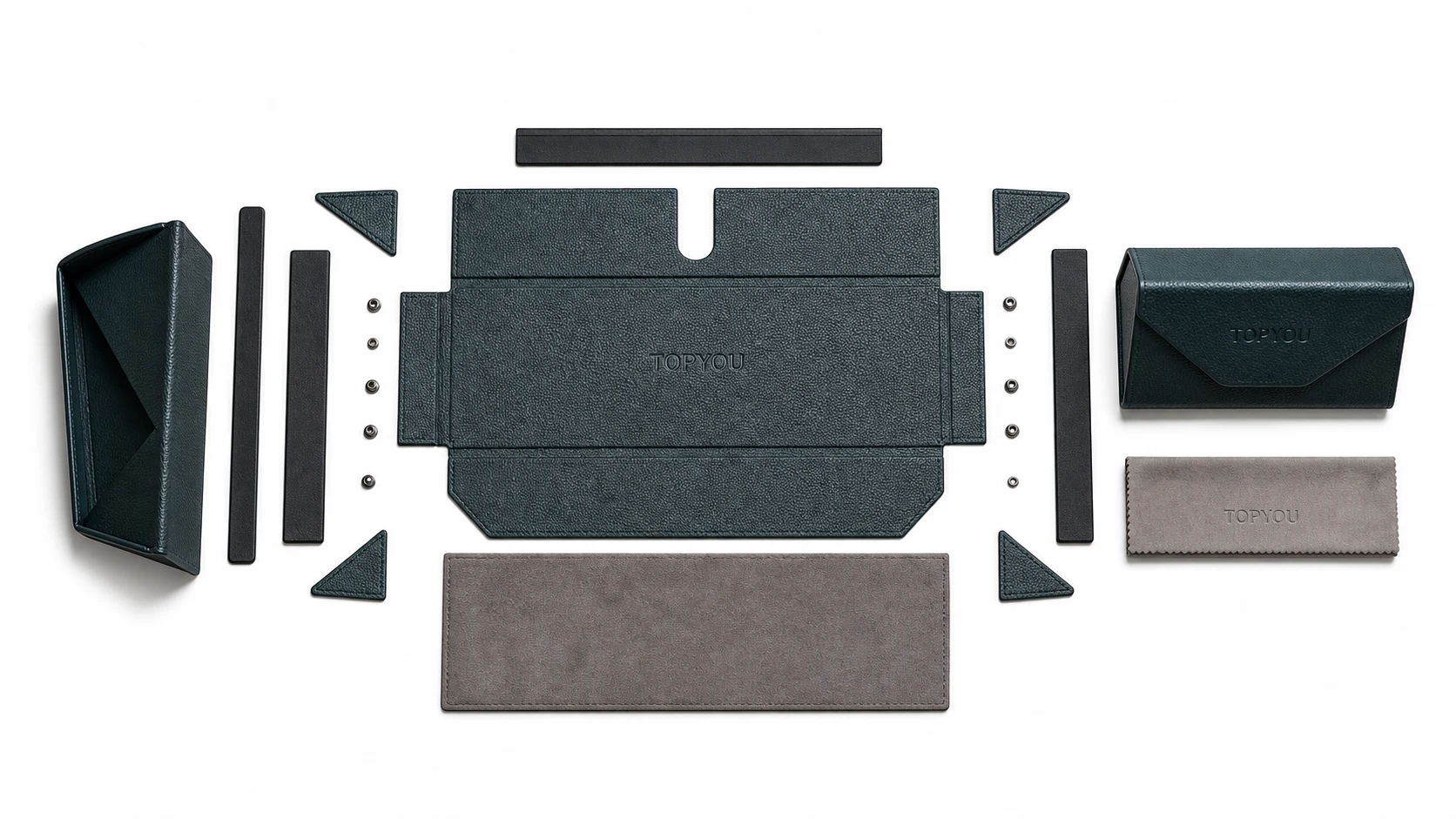

Measure the eyewear in its folded condition. Include the frame with the greatest width, the tallest lenses and any model with thick folded temples. Those features may be present on different frames, so do not assume that one measurement establishes the fit of the entire range.
Ask the supplier to identify the usable internal dimensions after lining and closure components are installed. A listed external size is not enough. Check the sample with the actual frames and record any contact with hard components or pressure from the closed lid.
Choose a first-run route that matches the brief
An existing case structure can provide a practical starting point while still allowing material, color or logo changes. A new structure can provide more design freedom, but may need additional development, tooling and approval work.
TOPYOU’s catalog presents selected small-batch case programmes, while the main collection supports broader packaging discussions. Confirm the minimum and available customization for the chosen version; a programme starting quantity does not apply automatically to every request.
Approve in stages rather than rushing to production
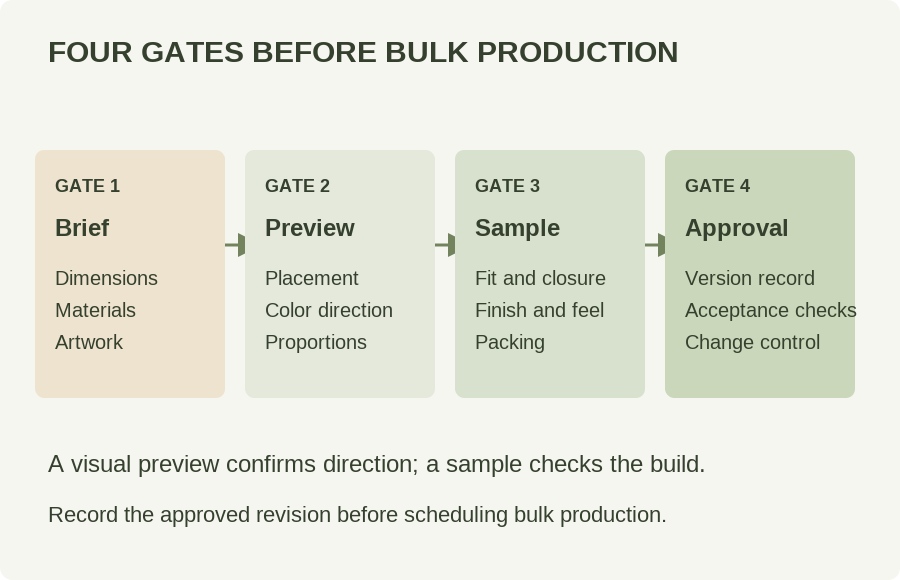
Use the visual preview to agree the direction of the artwork and colors. Use the physical sample to evaluate fit, construction, opening and finish. Then connect the approved sample to a written specification and artwork revision.
If a sample contains a substitute component, list the difference and identify how the final component will be approved. Keep unresolved points visible. A photograph of an attractive sample should not be treated as approval of a construction that has not yet been demonstrated.
Budget for the project, not just the case
Separate product cost, samples, tooling, logo setup, accessories, packing, testing and shipping. Record which lines are included in each supplier’s offer. A lower case price may exclude a box or setup cost included in another proposal.
The packaging cost guide includes a worked calculation showing how one-time charges affect cost per unit. Treat the figures as examples, then build the launch budget from actual quotations and verified delivery information.
Plan the approval-to-launch sequence
| Gate | Before moving on |
|---|---|
| Product brief | Frame range, channel, quantity and requirements are defined |
| Visual direction | Artwork placement and material direction are recorded |
| Physical approval | Fit, construction, finish and unresolved differences are reviewed |
| Production release | Specification, quotation and inspection scope are agreed |
| Dispatch | Packing, inspection, documents and delivery arrangements are confirmed |
Ask the supplier to confirm the schedule for each gate. Leave room for sample revisions and transport rather than calculating the launch date from manufacturing time alone. Where applicable, product and market obligations also need their own responsible reviewer; packaging approval does not establish the compliance of the eyewear itself.
Keep the first order useful for the second
Retain the approved sample, material codes, artwork files, inspection record and packing specification. After delivery, collect structured feedback from the sales channel and customers: fit, closure, presentation, transport condition and accessory use.
Use that information to change the next brief deliberately. Record what is being revised and why, so the supplier can assess cost, tooling and sample implications. This turns the first order into a basis for controlled development rather than an isolated purchase.
To discuss a first packaging programme, send your frame dimensions, reference style, quantity, logo and destination through the contact page.
YOUR NEXT STEP
Turn your packaging brief into a clear plan.
Share your preferred style, quantity, materials and destination. Our team can help confirm the options for your project.
Discuss your project