In this guide
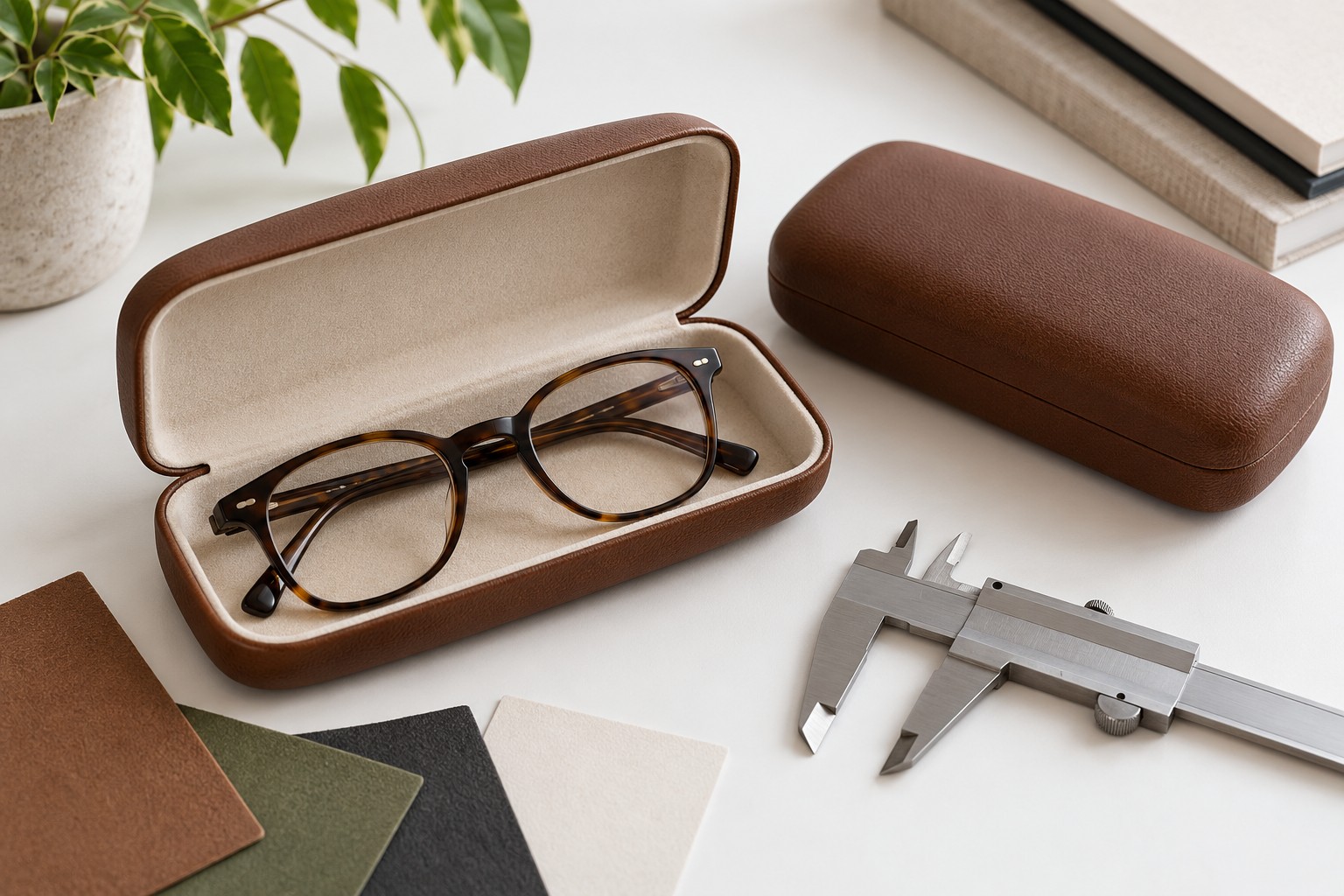
Premium eyewear packaging works when the structure, materials and branding feel coherent. More layers and more decorative processes do not automatically create a better result. Begin with the eyewear, the retail experience and the practical requirements of the order.
Define the experience before selecting the finish
Decide where the packaging will be used: an optical store, an online shipment, a gift presentation or everyday storage. Each setting places different demands on protection, opening, dimensions and accessories.
Write a brief that includes the frame dimensions, target quantity, brand palette, sales channel and delivery destination. This makes it easier to compare structures on their merits rather than selecting the most elaborate photograph.
Build a coherent material and structure combination
| Decision | Review in the sample |
|---|---|
| Exterior | Texture, color, edges and compatibility with the logo process |
| Structure | Fit, opening, closure and protection |
| Lining | Contact with the frames, finish and compatibility with assembly |
| Branding | Clarity, proportion, placement and consistency |
| Accessories | Practical value and alignment with the case |
| Packing | Protection and efficient carton arrangement |
Material names alone are not a complete specification. Ask for samples and identify the selected finish, backing, lining and color. Confirm any documentation requirements for the actual product and destination.
Use branding with restraint
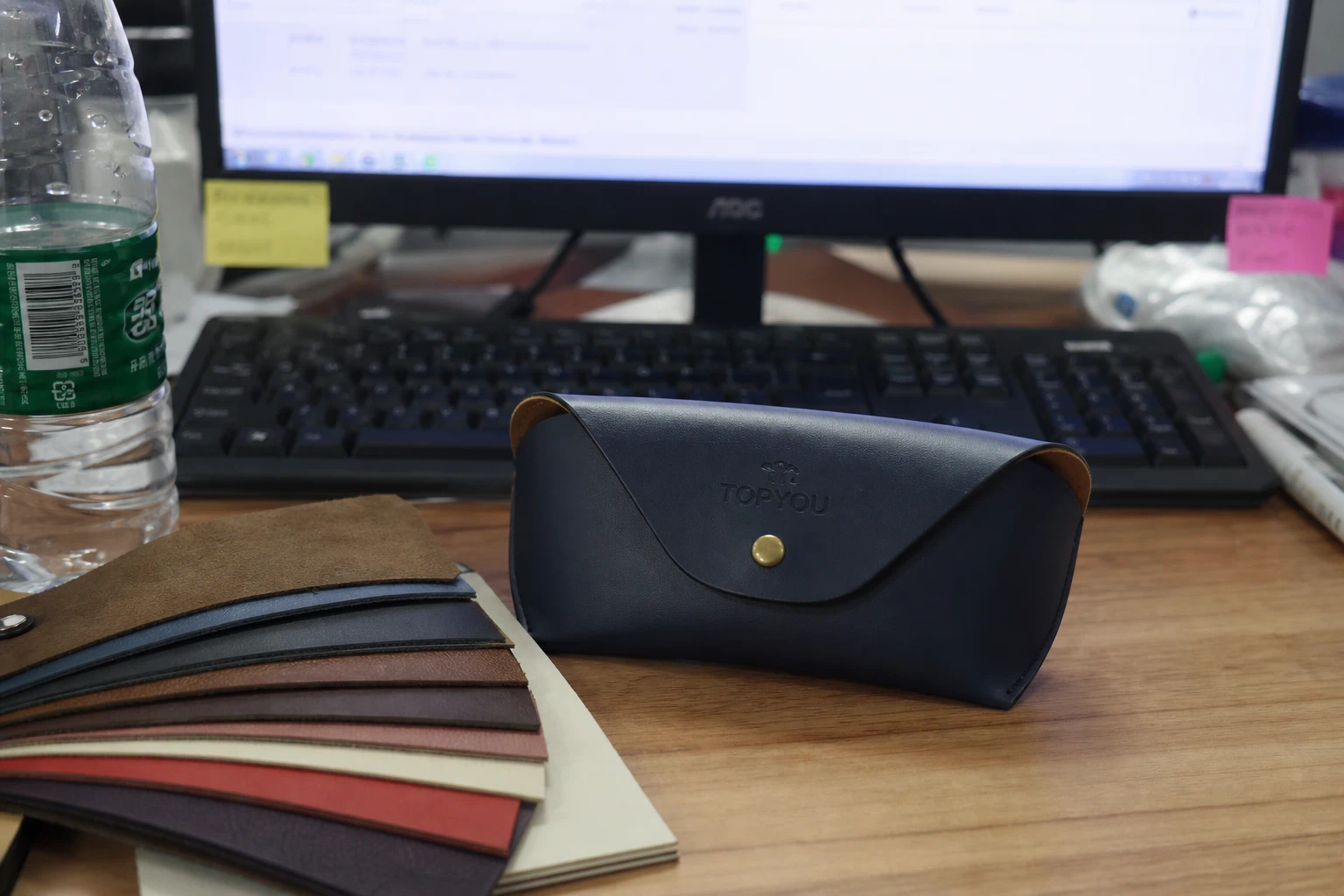
Choose a logo process that suits the material and the brand. Embossing, foil stamping, printing and metal components have different production requirements. Approve artwork size, placement and contrast on the proposed surface.
Small lettering and highly detailed artwork may need adjustment. A clean, proportionate logo can provide a stronger identity than several competing finishes. See the customization options to prepare the discussion.
Develop the complete set together
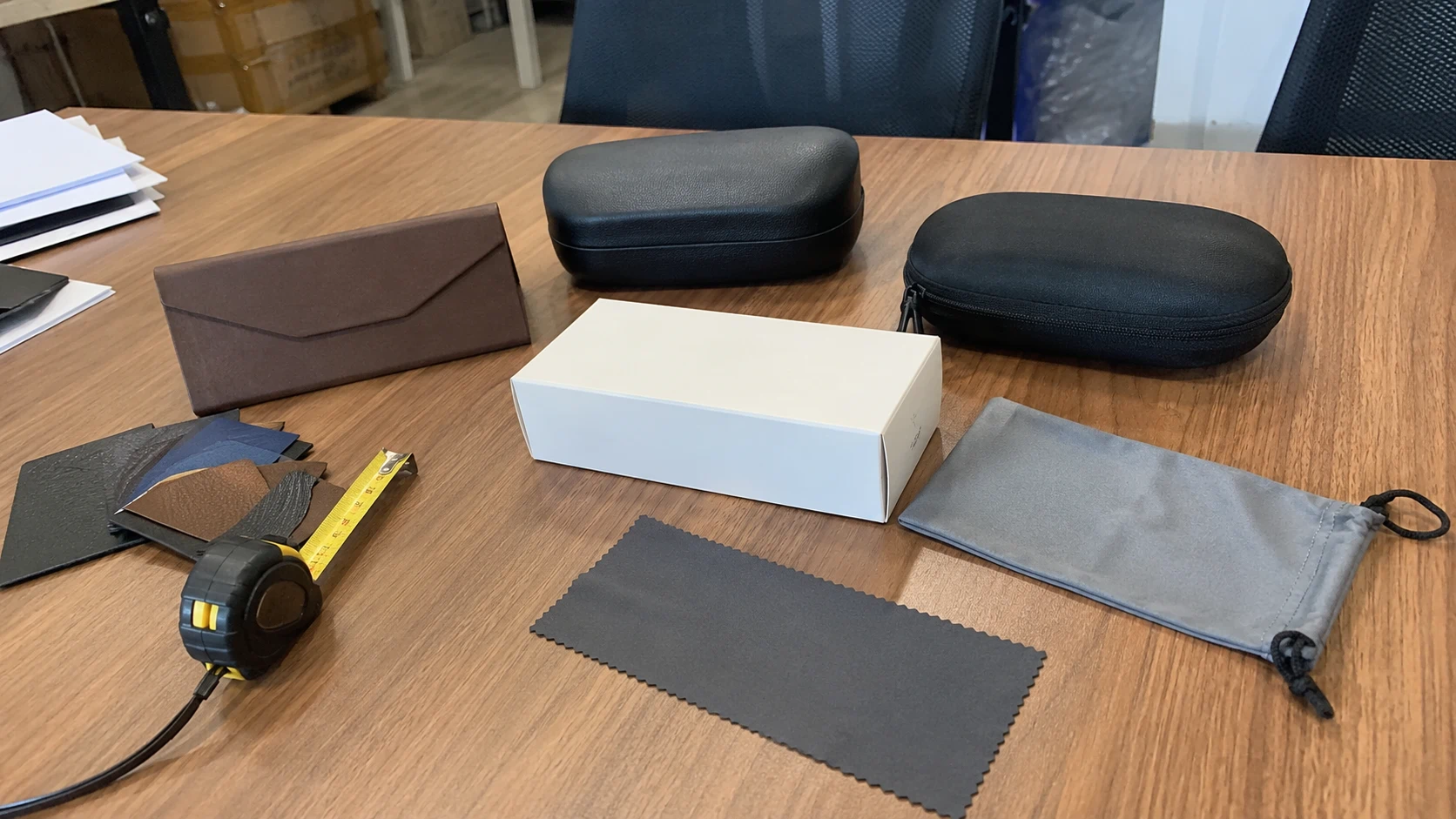
A case, cloth, pouch, paper box and insert should work as a system. Confirm dimensions and visual consistency across the set. Avoid extra components that add cost or volume without solving a protection or presentation need.
Compare the complete packing arrangement before final approval. A larger outer box can affect warehouse space and freight. Foldable components may help in some projects, but the saving depends on their actual packed form.
Approve a physical sample and a written standard
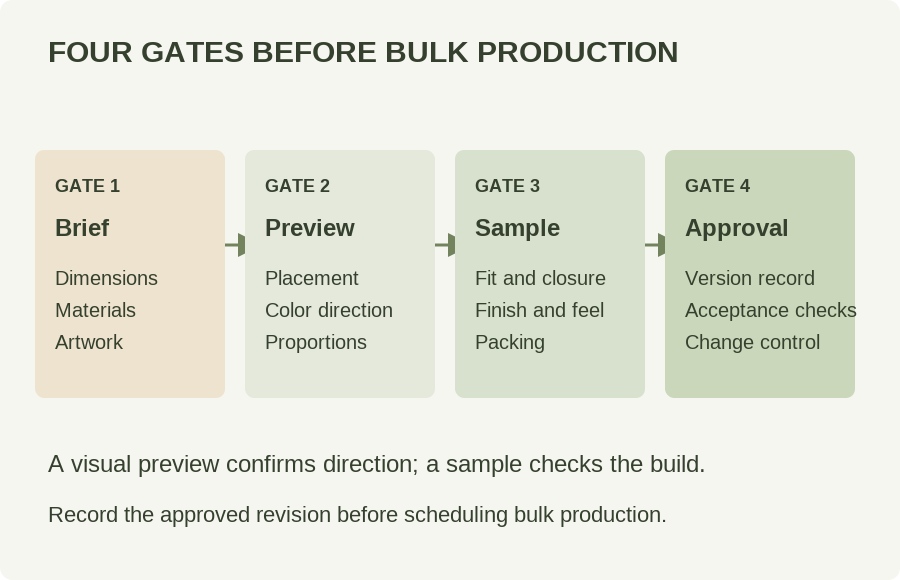
Use a digital preview to decide on a visual direction. Use a physical sample to evaluate fit, feel, closure, material combination and construction. Record the approved specification and any revisions.
- Dimensions and fit with the intended frames
- Exterior finish and color references
- Logo position and appearance
- Lining, edges and assembly finish
- Closure and opening behavior
- Accessories and packing arrangement
Agree inspection scope and documentation before production. Testing should answer the requirements of the selected product and market; it is not a universal guarantee based on the word “luxury.” Review the quality and testing process for the project.
Specify the build behind the appearance
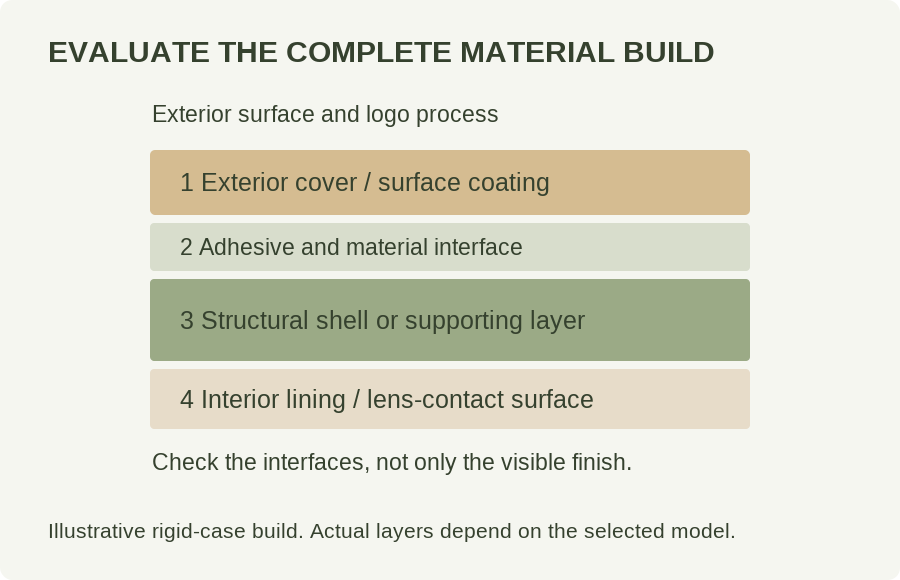
Review the complete assembly rather than selecting an exterior cover in isolation. The shell establishes the usable shape; the lining contacts the eyewear; the interfaces hold the materials together. The actual arrangement depends on the model, so ask for a description of the proposed build.
When comparing materials, record the supplier’s material code, backing, thickness or other relevant specification, texture and color reference. Ask which attributes can vary between batches and how those variations will be controlled. Do not treat a commercial material name as a complete technical description.
Translate a premium brief into acceptance criteria
| Design intention | Sample review | Approval record |
|---|---|---|
| Clean exterior | Edges, joins, surface marks and visible adhesive | Allowed cosmetic boundaries and reference photographs |
| Consistent branding | Logo proportion, position and finish | Artwork file, process and placement specification |
| Comfortable opening | Closure path, effort and alignment | Agreed functional checks for the selected structure |
| Protective interior | Frame fit and contact with hard components | Identified frame models and fit approval |
| Coherent set | Case, cloth, pouch and box together | Component list, dimensions and color references |

A premium finish should not disguise a fit problem. Check the largest frame in the range, including folded temple thickness and the lens or bridge area. Document the closed-case condition as well as the open presentation.
Separate color references from physical approval
A digital color code is useful for communicating direction, but different substrates and surface textures can produce different visual results. Approve the selected exterior, lining, cloth and paper component together under agreed viewing conditions.
Keep the physical reference and the supplier’s material codes. If one component changes, review the set again rather than assuming that a matching color name ensures a matching appearance. The record should identify which revision was approved and which version is scheduled for production.
Use the sample to review production-sensitive details
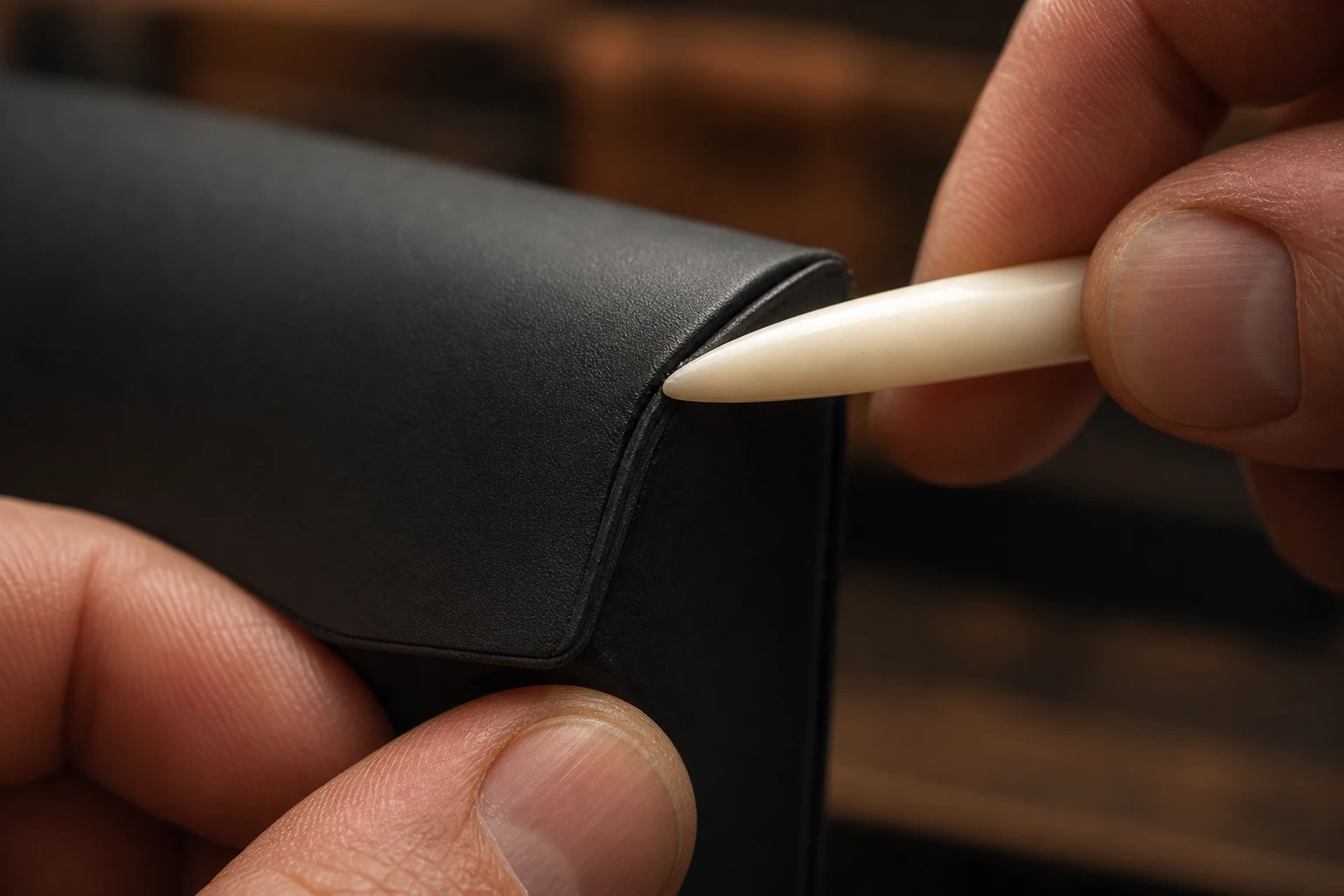
Look beyond the main logo. Check corners, seams, folds, edge finishing, hinges, magnet positions and interior joins where relevant to the chosen construction. Ask how the supplier will monitor those features during production and which checks will be included before shipment.
For bonded or coated materials, a visually acceptable sample does not establish long-term performance by itself. Discuss the intended use, storage conditions and any applicable testing with the supplier and laboratory. Avoid selecting a generic test temperature, duration or pass value without a reason tied to the project.
Choose the specification that can be repeated
Record the approved materials, artwork, tooling, sample and packing arrangement. If a material becomes unavailable, the replacement should go through a defined approval process. Repeatability depends on managing those changes, not just on matching the appearance of a photograph.
Before placing the order, confirm what the quotation includes and how future revisions will be handled. A clear technical brief supports both the premium presentation and the practical requirements of production, inspection and delivery.
Plan production and delivery as part of the design
Confirm quantity per style and color, development charges, sample milestones and the production schedule. Allow separately for revisions, inspection and shipping. Record the quote’s scope and validity.
Selected existing structures can be a practical starting point for a smaller launch. New structures or coordinated material development may require a larger commitment. Browse eyewear packaging styles and the small-batch catalog before selecting the route.
A strong premium result comes from a clear brief and consistent execution. Share your reference style, quantity, materials and destination through the contact page to begin a project-specific discussion.
YOUR NEXT STEP
Turn your packaging brief into a clear plan.
Share your preferred style, quantity, materials and destination. Our team can help confirm the options for your project.
Discuss your project